Tuesday, 19 February 2013

Oscar Pistorius charged with premeditated murder in death of girlfriend

PRETORIA, South Africa — Olympian Oscar Pistorius fired into the door of a small bathroom where his girlfriend was cowering after a shouting match on Valentine's Day, hitting her three times, a South African prosecutor said Tuesday as he charged the sports icon with premeditated murder.
Pistorius sobbed softly as his lawyer insisted that Reeva Steenkamp's shooting was an accident.
Oscar Pistorius, center, hiding his head from cameras, is transported from jail to his bail hearing Tuesday in South Africa. (AP Photo)
"She couldn't go anywhere. You can run nowhere," prosecutor Gerrie Nel said at a bail hearing.
The shooting death has shocked South Africans and many around the world who idolized Pistorius for overcoming adversity to become a sports champion, competing in the London Olympics last year in track besides being a Paralympian. Steenkamp, 29, was a model and law graduate who made her debut on a South African reality TV program on Saturday, two days after her death.
Nel said the couple had had a shouting match and Steenkamp fled to the bathroom, down a seven-meter (yard) passage from the bedroom, and locked herself in. He said the 26-year-old Pistorius got up from bed and had to put on his prosthetic legs to reach the toilet door.
Nel told the court the door was broken open after the shots were fired. Pistorius' lawyer insisted there was no evidence to substantiate a murder charge.
"Was it to kill her, or was it to get her out?" defense attorney Barry Roux asked the court, referring to the browken-down door. "We submit it is not even murder. There is no concession this is a murder."
Pistorius, who had appeared grim and solemn at the start of the hearing, broke down and sobbed softly with his head in his hands as his lawyer argued that he had mistaken Steenkamp for a burglar. The shooting in the early hours of Feb. 14 came after neighbors had heard a loud argument and then gunshots, police have said. The couple had been dating for only about three months.
As details emerged at the dramatic court hearing in the capital, Steenkamp's body was being cremated Tuesday at a memorial service in the south-coast port city of Port Elizabeth. The family said members had arrived from around the world. Six pallbearers carried her coffin, draped with a white cloth and covered in white flowers, into the church for the private service.
June Steenkamp, the mother, said the family wants answers.
"Why? Why my little girl? Why did this happen? Why did he do this?" she said in an interview published Monday in The Times newspaper.
At the court, Nel said the killing was premeditated because Pistorius had planned to say that he thought he was shooting an intruder, and had told that story to his sister, Aimee.
"It was all part of the preplanning. Why would a burglar lock himself inside the bathroom?" Nel asked. The shooting happened at Pistorius' home in a guarded and gated community in a luxury suburb of Pretoria.
Roux, in arguing that Pistorius should be freed on bail, he said there were no other charges outstanding against the double-amputee who last year became the first double-amputee track athlete to run at the Olympics.
Legal experts say it could take months for the case to be tried.
Pistorius, in a gray suit and tie, nodded after the chief magistrate asked if he was well. And he nodded his appreciation when his brother, Carl, pressed his shoulder in support. Journalists jammed into the courtroom, which was full with almost 100 people, including Pistorius' father, Henke, and sister Aimee.
In an email to The Associated Press on Monday, Pistorius' longtime track coach — who was yet to comment — said he believes the killing was an accident.
"I pray that we can all, in time, come through this challenging situation following the accident and I am looking forward to the day I can get my boy back on the track," Ampie Louw wrote in his statement. "I am still in shock following the heart-breaking events that occurred last week and my thoughts and prayers are with both of the families involved."

FIFA have confirmed goal-line technology will be used during the 2014 World Cup.

Four years too late!

FIFA: 2014 World Cup will see goal-line technology

OVER THE LINE ... but Frank Lampard's goal did not stand against Germany in 2010

FIFA have confirmed goal-line technology will be used during the 2014 World Cup.

It means dodgy decisions — like Frank Lampard's disallowed effort in England's last 16 defeat to Germany in the 2010 tournament — should be a thing of the past.
A system was trialled at the Club World Cup in December, and FIFA will now roll it out for this summer’s Confederations Cup before the big one in Brazil next year.
FIFA said in a statement: “The aim is to use goal-line technology in order to support the match officials and to install a system in all stadia, pending the successful installation, and pre-match referee tests.”
Rival systems Hawk-Eye and GoalRef have already been approved by FIFA approval and will vie, along with others, for the World Cup gig.
FIFA will choose their preferred provider in early April.

Security guard gets eight years’ jail for sexually abusing five-year-old girl


Adleen being lead out of court. Adleen being lead out of court.
AMPANG: A security guard was sentence by a Session Court here on Tuesday to eight years prison for forcing unnatural sex on a child, who was then in the care of his wife who was babysitting the five-year-old girl.
Adleen Che Ibrahim, 28, was found guilty of forcing the child to perform oral sex on him while in a bathroom of his home in Pandan Perdana on August 15, 2011.
The child's mother, during her Victim Impact Statement (VIS), said her child had become an introvert after the traumatic incident and was even afraid to go to school.
She added that the child suffered from nightmares and was unwell for a while, after the incident.
"I've had to take leave to take care of my child when family members can't.
“I now have a phobia of sending her to babysitters, especially those with men in the family," she said.
Adleen was seen wringing his fingers and looking away from the victim's mother while she gave her statement.
DPP Nadiah Malek Fauzie urged for a heavy sentence, considering the mother's VIS and the fact a minor was assaulted.
In the course of the trial, the prosecution adduced nine witnesses, while the defence called on three witnesses.
Judge Manira Mohd Nor found that the victim's detailed testimony of the incident, even drawing the accused's privates, had convinced her that the victim had indeed experienced the ordeal.
"How could a six-year-old (at time of trial) girl draw the man's privates and graphically describe the incident, if she did not experience it," said judge Manira.
In her grounds of judgement, she ruled that the defence's testimony was bare denial, saying the child had accused Adleen as she disliked him and felt he was strict with her.
Judge Manira noted that, as the husband of the victim's babysitter, Adleen had ample opportunity and access to the victim.
She sentenced him to eight years in prison, saying as an adult he should have known better than to abuse the trust of a child in his care.
Counsel P. Suthes said she would be appealing against the decision, on grounds of insufficient medical evidence in the prosecution's case.

CULLED FROM www. http://www.allvoices.com/news

Northern Nigeria: The Conflict Within – By Zainab Sandah

Northern Nigeria: The Conflict Within – By Zainab Sandah

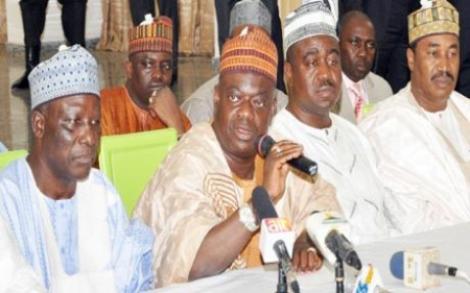
Members of Nigeria's Northern States Governors Forum.
Ethnicity and religion are not predetermined; we are not born, do not possess an innate sense of ethnic or religious affiliation, we become Yoruba, Christian, Hausa or Kataf largely as a factor of geographical, ancestral, and societal influences.

Against this backdrop, it is ironic that in a substantial number of the 19 states that make up northern Nigeria, and indeed in the country as a whole, ethnicity and religion have become the primary factors that dictate how we (co)exist.  Of course, the question of Nigeria’s fragile unity has never been in doubt. But much as Nigeria is burdened with crises of ethnic and religious nature, the (near-clichéd) media characterization of  ‘largely northern Muslims and southern Christians’ is anomalous and misleading, for the mere fact that both southern and northern Nigeria are multi-ethnic and multi-religious.
Moreover, the unity of the northern region as an entity in itself is arguably in a worse state than that of the country as a whole. It may, therefore, not be far-fetched to suggest that northern Nigeria, even though geographically homogeneous, is on a precarious cliff due to its continued and ever-widening heterogeneity, comprising of ethnic, religious and political dynamics, and that if left untended, will have national implications.
It is hard to recall a three or five-year period – since the famous anti-government and intra-religious riot that was led by the YanTatsine group in Kano State in the ‘80s – in which one or other settlement within northern Nigeria has not been consumed by ethno-religious strife. It is also one of nature’s not so funny jokes that warring parties largely happen to be neatly divided along religious lines, and belong respectively to ‘majority’ (Hausa and Fulani and Muslim) and ‘minority’ (Kataf, Berom, etc. and Christian) ethnic groups. States like Kano, Kaduna, Bauchi and recently Plateau have been the traditional flag-bearers of the country’s ethno-religious riots.
For instance, the riots that happened in Kano in 1982 and 1991 were largely caused by religious differences, the former to do with Muslim opposition to the reconstruction of a church in Fagge area of the state, and the latter, in objection to the invitation issued to a German Evangelist Reinhard Boonke to hold a Christian crusade in the state. It is worthy to note that Muslims primarily objected to the Christian crusade because they had been denied a chance to host the late Ahmed Deedat, a Muslim scholar from South Africa in Kano for an Islamic sermon. This of course led to loss of lives and destruction of property.
A near-unique characteristic of riots in Kano is its largely inter-religious nature – there is relative ethnic harmony within the state since most of the indigenous population is Hausa and Muslim. However, because of the cosmopolitan and commercial nature of the city, there is an intersection of tribes, with the Igbo – largely Christian – being the most visible because of their commercial success. The Hausas have been known to clash with the Igbos in the course of religious tension, thus bringing non-regional entities into the fray and further complicating an already complex situation.
Unlike Kano state, Kaduna and Plateau (Jos) states are marked by, ethnic, territorial and religious differences largely driven by the issue of  ‘indigeneship’ or the ‘indigene-settler clause’. While the issue of indigeneship is a burdensome colonial legacy, it is also promoted by a vague and rather discriminatory constitutional provision that fortifies the superiority of the indigene over the Nigerian citizen – who in this context is considered to be a settler – thus, making the settler an inferior entity lacking political influence, and denied benefits like scholarship opportunities.
According to a recent report released by the International Crisis Group titled ‘Curbing Violence in Nigeria: The Jos Crisis’, 80 episodes of violent riots have occurred from 1999 to 2004 between the indigenous Berom/Anaguta/Afizere (largely Christian) and non-indigenous Hausa and Fulani (largely Muslim) tribes in Jos.  In Kaduna, Southern Zaria Christians of Zango Kataf, Kafanchan etc. who enjoy a numerical advantage are constantly at loggerheads with Hausa Muslims and this often leads to reprisal attacks in neighbouring cities. One such notable riot that generated reprisal attacks in Kano and Kaduna metropolis was the May 1992 Zango Kataf riots. A more recent example, which had a chain effect (of both attacks and counter-attacks) from Kaduna to Zango Kataf to Kano etc. was the 2011 post (presidential) election violence.
Ethnicity and religion therefore can be considered the badge of identity the average northerner (or Nigerian) wears; apart from establishing social interactions, they also determine political viability and by extension economic inclusiveness, which intensifies power struggle and conflicts among rival ethnicities within a given state (Kaduna, Plateau come to mind). Competition over access to state resources, generated mostly through oil revenue from the Niger Delta, provides much needed fuel to keep the ethno-religious inferno alive.
As if indigeneship and its divergent, divisive complexities were/are not trouble enough, with the return to democratic rule in 1999 and armed (again) with an ambiguous constitutional reading, 9 northern states with Muslim majority population instituted the Sharia legal system (both civil and criminal) as the law. 3 more northern states followed with the adoption of Sharia, but only in areas with large Muslim populations. Adoption of, and Sharia in itself, is not by any means wrong, and represents the aspirations of certain section of people within those 12 states, but when considered within the context of a society already steeped in mutual animosity and violent conflict, or within the context of a multi-faith, multi-ethnic and democratic society, the counter-intuitive nature of that policy becomes glaring.
Institution of the policy predictably led to riots in various northern states, consolidated the ethno-religious divide, which for instance culminated in the advent of separate living communities/quarters in some areas in Kaduna state (it is claimed that there is currently no single Muslim living in Sabon Tasha and no single Christian living in Rigasa – both areas of Kaduna metropolis). I would suggest that for a multi-faith region steeped in inter-ethnic/religious suspicion, secularism would have continued to serve as a better balancing act.
With the vehement negation of all state and constitutional authority and the call for national adoption of the Islamic legal system by Jama’atu Ahlis Sunna Lidda’awatih wal-Jihad (popularly called Boko Haram), a terrorist group operating in northern Nigeria, Sharia once more became a contentious issue, only on a much bigger platform this time around. Even though the views of the terrorist group are not shared by northern Muslims in general, the continued negative leveraging of Sharia as a condition for cease-fire, continued massacre of innocent civilians and bombing of churches and state properties by the group, has led to calls by some in the south for a re-negotiation of the continued unity of Nigeria.
Considering the above narrative of detrimental intersectionality between ethnicity, religion (Sharia), and power struggle, it has become imperative to seek practical solutions to re-stitch the unraveling thread of unity, first regionally and then nationally. How can the northern region advance a psychological erosion of ethnicity, or bring northerners out from their respective ethnic enclaves, to embrace regional harmony?
So far, government at state and federal levels has set up various committees to look into remote and general causes of the riots, several reports and recommendations have been given, but implementation is lax. For instance the International Crisis Group has urged the government to ‘implement the recommendations of the published Fiberesima, Tobi and Ajibola commissions of inquiry and whitepapers,’ note that these submissions were respectively made in 1994 (Fiberesima), 2001/2002 (Tobi), 2009 (Ajibola). Similarly, the recommendations from various commissions of inquiry into the causes of the Sharia crisis in Kaduna over a decade ago have not been implemented. What is needed primarily is a body of committed and specifically, regionally focused civil society and other pressure groups to see to the implementation of reports.
The status of the constitutionality and legality of adoption of Sharia law in a pluralistic, federating nation, and respective states, has to be made constitutionally clear. Likewise, the indigene-settler clause needs to be reviewed. The discriminatory aspects of that policy, like educational, political privileges for (only) indigenes have to be broadened to include non-indigenes, but for a longer term national integration goal, the clause will have to be abrogated completely. It remains doubtful though whether a mere constitutional provision can sufficiently erode the acquired psychological effects of ethno-religious differences. This suggests the need for CSOs to oversee the launch or intensification of policies that drive inter-faith and inter-ethnic dialogues between conflict-ridden parties at the grassroots. These groups also need to build capacity and political literacy especially for youths, with respect to understanding rights and duties of political representatives.
As a matter of urgency, the national mono-economic system, and culture of dependency on federally allocated funds for development of states and local governments needs to be revised. When all local government (chairmen) or states (governors) are made to generate revenue for local and state sustenance, instead of being dashed ‘free oil money’ and freedom not to account for state funds – the incentive to occupy public and elective offices will reduce and by extension only competent hands will vie for such positions and emerge as leaders. This will ensure that the immediate constituency for respective politicians will no longer be mosques, churches or their ethnic enclaves.
The northern leadership, especially the Northern State Governors’ Forum (NSGF), needs a people-focused regional alliance, a ‘new’ blueprint for development that prioritizes literacy, (youth) employment, infrastructure development, girl child and women empowerment schemes, and optimization of mineral resources. This can effectively deplete the number of available recruits that fight during ethno-religious crises. Northern NGOs and CSOs need to act as watchdogs and guide the policies of the NSGF.

CULLED FROM  www.africanarguement.org

Sand dredger killed, policeman injured in Lagos explosion

A victim who sustained a serious injury in the explosion
A sand dredger, Oladele Pius, was killed on Monday after an explosion under the FESTAC Link Bridge in Amuwo Odofin Local Government, Lagos State.
A police inspector, Akin Sunday, also sustained a serious injury in the explosion that caused panic in the area.
PUNCH Metro learnt that Pius, who was the branch Chairman of Sand Dredgers in the area, was torn apart.
According to eyewitnesses, rescue workers found it difficult to carry Pius’ remains and had to use shovels to pack them in different body bags.
They (eyewitness) said the inspector’s legs were shattered, while his eyes and hands were affected by the explosion.
PUNCH Metro learnt that the explosion which occurred at about 12pm, caused panic because many of the residents and passersby had speculated that the explosion might have been as a result of terrorists’ activities. They reportedly fled the area.
An eyewitness, who claimed to be the deceased’s colleague, said he (deceased) resumed work in the morning under the bridge, and having parked his vehicle, made for his duty post.
The eyewitness said some moments later, the deceased received a telephone call following which he drove out.
He said the deceased returned accompanied by a policeman and then called one of his workers to buy a local gin which he shared with the policeman
He said the policeman was leaving the area when the explosion occurred, killing Oladele on the spot and seriously injuring the policeman who had moved a few steps away before the device, connected with dry cell batteries and wires, detonated.
Dogo, one of the deceased’s workers, described him as a kind-hearted man, adding that he was survived by five children and two wives.
The policeman was however rushed to a nearby hospital
It could not be ascertained who planted the explosive, but the police denied that it was a bomb.
Commissioner of Police for the state Police Command, Umar Manko, said full investigation had commenced to unravel the cause of the explosion.
 Manko however said preliminary investigation revealed that the explosion was caused by an electrical fault.
While briefing journalists at the state command headquarters on Monday, Manko urged residents not to panic but continue with their lawful businesses, assuring them that the police were committed to safety of lives and property in the state.
He said, “Contrary to people’s fear that it was a bomb blast, it was a mere electrical fault at the Amuwo Odofin Bridge. Anti-bomb experts have been called in to assess the situation and I will be adequately briefed later.
“From the investigation so far, it has been revealed that it was neither a terrorist attack nor an act of Boko Haram. It was also not a bomb blast.
“It is not a question of letter bomb. This is not an incident that will attract fear. The state is not under any attack from anywhere.”
The scene of the explosion had, however, been cordoned off by the Bomb Disposal Unit of the Nigeria Police and officials of the Lagos State Emergency Management Agency.

Monday, 18 February 2013

Okonjo-Iweala Talks Of Africa’s Future

This weekend, Dr. Ngozi Okonjo-Iweala was the keynote speaker at the Harvard Africa Business Club Conference. The conference is truly a spectacular event calling together dignitaries, professionals, and students from all across the African Diaspora. More than 1200 guests were in attendance at her talk and dignitaries included:
-Honorable Miles Sampa, Deputy Finance Minister of Zambia
-Honorable Professor Adebowale Ibidapo Adefuye, the Nigerian ambassador to the United States
-Mr. Jean-Louis Ekra, the President of the African Export-Import Bank
-Mr. Acha Leke, Head of McKinsey Lagos Office
-Professor Wole Soboyejo, President and Provost of the African University of Science and Technology
-Mr. Leslie Nelson, Managing Director of General Electric West Africa
-Ms. Louisa Mojela, Chairman and CEO of WIPHOLD, a prominent black and women focused investment group in South Africa
The theme of the conference was “Redefining Africa,” and it was a look at the changing paradigm of the “dark continent” to the continent where the best opportunities are amongst the brightest in the world. Listen Okonjo-Iweala’s four-part speech above (use the arrows on the side of each video to navigate to the next part). Below are some choice excerpts:
1. “Just last week, The Financial Times newspaper reported cheekily that: There is a second scramble for Africa under way…Nigerian stocks have returned almost 63 percent in US dollar terms during the past 12 months, Kenya’s Nairobi All-Share index has returned 46 percent and Ghana’s market has climbed more than 17 percent”
2. “The African middle class has tripled since the 1980s with a total size of about 313 million people or 34 percent of the population. This middle class is growing largely because of sustained economic growth, more salaried jobs and the growth of the services sector. So I am convinced that there is an emerging story on Africa today. The question is: What role would each of you play in this new story?”
3. “Despite Africa’s recent strong growth and rising middle class, many poor households are being left behind, and the gap between the rich and the poor is widening. As the Arab Spring has taught us, rising inequality and youth discontent could have serious political consequences. In Africa, we must take deliberate actions to address this by introducing social protection measures, which target these poor households. In Nigeria, we recently introduced the Community Services Scheme which aims at engaging unskilled youth in labor-intensive activities, and also a Graduate Internship Scheme. About 119,000 youth across the country are to be engaged in the first quarter of this year.”
4. “African leaders should also build institutions which promote transparency and accountability in the management of the resource revenues. In Nigeria, we are building and maintaining institutions for managing our natural resources. Today, we have built a buffer of excess crude savings of about $9 billion, while establishing a Sovereign Wealth Fund with an initial capitalization of $1 billion. Clearly, transparency and fighting corruption will be critical to harness as much of our domestic resources as possible.”
5. “What services can you – our young African Zuckerberg entrepreneurs – deliver to the continent?”
6. “The third US President, Thomas Jefferson, once remarked that he ‘liked the dreams of the future better than the history of the past.’ I think the same can be said of my view for Africa in the coming years. I am optimistic that you, the next generation of entrepreneurs and young professionals in Africa will rise to this challenge in contributing to a more prosperous Africa. You are the reason why I am optimistic about the continent’s future.”


by Transparent Nigerian

PATIENCE GOODLUCK THANKSGIVING SERVICE

I Actually Died! I Passed Out for More Than a Week” - Patience Jonathan Finally Opens Up on Health Condition that Kept her in a German Hospital


For about seven weeks in 2012, First Lady of Nigeria Patience Jonathan was away from the country and during this period, speculations were rife about her health condition. There were several insinuations about her absence. Some media reports claimed she had cancer, others claimed she had fibroid while some claimed she went to have a cosmetic surgery among others. During this period, the Presidency only denied the insinuations saying she travelled to rest and kept mute for so long, even when she returned to the country to a lavish reception.
However, yesterday at a thanksgiving service held at the Presidential Villa, she finally revealed how a debilitating sickness almost took her life saying that she passed out for over seven days and that her aides, believing that she was dead, were already selling her personal effects before God “miraculously” brought her back to life.


Punch reports that she did not reveal the nature of her ailment but spoke about some of the things she passed through during that period.
“I remember when Chief (Olusegun) Obasanjo was the President of the country, I was close to his late wife, Stella. We worshipped together in this chapel. It was a painful moment for me that time when she died and her corpse was brought here. That was how my corpse would have been brought here. It was not an easy experience for me. I actually died; I passed out for more than a week. My intestine and tummy were opened.
“I am not Lazarus but my experience was similar to his own. My doctors said all hope was lost. A black doctor in London who is with us in this service was flown in when the situation became critical. It was God himself in His infinite mercy that said I would return to Nigeria. God woke me up after seven days.
“I know that some people somehow leaked the information that I was dead. They are people that I trust and rely on; to them, I was dead and I would never return to the country alive. Some of them even sold my things off. I won’t say everything here. It is the Lord’s doing that I returned alive. When God says yes, nobody can say no.
“People are always afraid of operation (surgery) but in my own case, while my travail lasted, I was begging for it (surgery) after the third operation because I was going to the theatre every day. It was God who saw me through. I did eight or nine operations within one month. It was not an easy one.”
She said her experience taught her that there was nothing like a First Lady and that she realised that she was “a common woman and my name is simply Patience.” President Goodluck Jonathan who spoke at the reception after the thanksgiving service said that he lost a second cousin while he was still a deputy governor in Bayelsa State and that during the burial, a story was told how anybody in his community who is gradually going into limelight always die mysteriously. Following this, he said all eyes were focused on him, apparently insinuating that it was his time to die, Punch reports.
“The story was that one of us (the President or his wife) will die. Today we are celebrating her. Her recovery has put an end to that belief. I am not too good in celebrating, but for this particular one, I think we have to thank God for keeping the life of my wife.
“If anything had happened, there would have been different stories. Fake prophets would have given their stories. As mortals, we must fall sick and die but how and when is what matters most. To die when serving your people is not good. Death should come after you have finished serving.”
The first lady was away between August and 14th October 2012. When she returned, she denied having a cosmetic surgery or tummy tuck as was widely speculated and since then, has been silent about her absence until yesterday.

Sunday, 17 February 2013

America's 'Slave Narratives' should shock us

"I was owned by Johnson Bell and born in New Orleans, in Louisiana."
Those words were spoken by a man named Frank Bell.
He said that according "to the bill of sale, I'm 86 years old."
His words, and those of thousands of other American citizens, were transcribed in the 1930s, at the depth of the Great Depression. As part of President Franklin D. Roosevelt's efforts to restart the economy, the Works Progress Administration was founded, and one arm of the WPA was something called the Federal Writers' Project.
Men and women were hired by the government to work on various assignments documenting American history and American life.
One of those assignments, vast in scope, came to be known as the Slave Narratives.


"If a woman was a good breeder she brought a good price on the auction block," said Hattie Rogers, a North Carolina resident, when she was interviewed in 1937. "The slave buyers would come around and jab them in the stomach and look them over and if they thought they would have children fast they brought a good price."
We are in the midst of Black History Month. The slave years in the United States were not only black history, they were American history -- the ugliest and most indefensible chapter.
I had long heard of the Slave Narratives, but had never read them. The original interviews comprised 17 bound volumes in the Library of Congress, filled with the firsthand accounts of more than 2,000 former slaves, and hundreds of photographs.
The interviewers were sent to 17 states, and that is how the printed conversations are bound and arranged. I have been reading two volumes -- covering interviews done in North Carolina and in Texas.
1865: Lincoln talks of 'sin of slavery'
What is so shattering is the matter-of-fact tone of what the former slaves said. The United States was well into the 20th century by the time the interviews were conducted; automobiles had come to the nation, as had radio and motion pictures and air travel. The country, in many ways, was beginning to resemble the nation we live in now.
Yet residing in America's cities and towns were men and women who recalled being sold at auction, of seeing brothers and sisters led away in chains, of having -- in their words -- "good owners" or "cruel masters." Survivors of a time when, in many states, it was perfectly lawful for human beings to own other human beings, and to buy and sell them.
Mary Armstrong, 91 and living in Houston when she was interviewed, said the person who owned her family was "so mean he never would sell the man and woman and (children) to the same one. He'd sell the man here and the woman there and if (there were children) he'd sell them someplace else."
Charity Riddick, 80, interviewed in North Carolina, had a similar memory. "I belonged to Madison Pace in slavery time," she said. She had a brother whose first name was Washington, she said, but he was "sold away." Their mother "cried a lot about it."
The former slaves who were still alive in the 1930s were, of course, the youngest of those who were enslaved before emancipation. Many of them were relating childhood or adolescent memories, while others were passing on what their parents related to them.
There were many, however, who were old enough to have vivid firsthand recollections of specific instances. Stearlin Arnwine, who was 94 and living near Jacksonville, Texas, when he was interviewed, said he would see slaves on the auction block, stripped to the waist for inspection by potential buyers. Women and their children, he said, would be crying and begging "not to be separated," but it did no good: "They had to go."
As anguishing as are the stories recounted by the former slaves, troubling in a different way was the methodology many of the interviewers chose in committing the stories to written form. Most of the writers were white; in the 1930s, apparently it was still considered acceptable to use crudely rendered dialect in recreating on paper the speech patterns of African-Americans. That is how some of the writers transcribed the interviews, and in many cases it comes off as something close to mockery, whether or not it was intended that way.
The power of the stories overrides everything else. The quiet starkness of the telling:
"My father was a slave, A.H. Stewart, belonging to James Arch Stewart, a slave owner, whose plantation was in Wake County," said Sam T. Stewart, 84, interviewed in North Carolina in June 1937. "When I was two years old James Arch Stewart sold my father to speculators, and he was shipped to Mississippi. I was too young to know my father."
You can read from the volumes for hours at a time, and when you are finished for the evening you can look around you and try to comprehend that all of this was taking place in the same nation where we live today.
Alex Woods, of Raleigh, North Carolina, born on May 15, 1858, said that as a boy he saw slaves being marched on their way to the auction block, each person chained to the one next to him, and, as he witnessed this, being "afraid my mother and father would be sold away from me."
Story after story after story. Henry H. Buttler, 87, living in Fort Worth in the 1930s but born a slave in Virginia:
"The plantation consisted of about 30 acres, with about 30 slaves, though this number varied and sometimes reached 50. Mr. Sullivan owned my mother and her children, but my father was owned by Mr. John Rector, whose place was adjacent to ours."
And, when Abraham Lincoln proclaimed that this must no longer be permitted to go on, millions of Americans said that he was dead wrong.

CULLED FROM www.cnn.com

The Rigmarole over Maina

In the past one week, the public has been treated to a media feast that clearly demonstrates how cheap corruption has become in Nigeria. The chairman of the Pension Reform Task Force, Alhaji Abdulrasheed Maina, was summoned by the senate in connection with the alleged misappropriation of pension funds amounting N195 billion. Maina maintained a snobbish disposition to the senate summons, which prompted the upper chamber to direct the Inspector General of Police Mohammed Abubakar to arrest him. The senate also directed the anticorruption agencies to immediately commence a probe and prosecution of Maina. But he remained out of reach amid accusation that the senate committee investigating him for pension fraud was demanding N3 billion from him.
Sensing that the executive might be engaged in a covert effort to shield Maina, who is widely believed to be close to President Goodluck Jonathan, the senate took the battle to the executive, asking it to choose between Maina and the senate. The president’s special adviser on media and publicity, Dr. Reuben Abati, responded in a statement where he denied that Jonathan was backing Maina, insinuating that the president was handicapped in the circumstance, and insisting that only the Head of Service could act against the pension taskforce head.
But barely 24 hours later, the president moved against Maina and directed the Head of the Civil Service of the Federation to commence disciplinary action against him for absconding from duty. This seems like an afterthought by a reluctant anticorruption campaigner. It certainly does not portray Nigeria as a country seriously concerned about fighting one of the most virulent causes of its underdevelopment.   
This back-and-forth coincides with the assertion by Chairman of the Independent Corrupt Practices and Other Related Offences Commission, Ekpo Nta, that the country has enough laws but lacks the will to fight corruption. “We have more than enough laws that will stamp corruption out of our system but the problem is implementation. Implementing our laws is the problem,” Nta said on Tuesday in a lecture he delivered at a ceremony to mark the 50th anniversary of the Department of Political Science, University of Ibadan. This should be food for thought for the government – if the fight against corruption ranks highly on its preferences.  

CULLED FROM www.thisdaylive.com

Saturday, 16 February 2013

Wenger should offer his resignation after Blackburn shambles


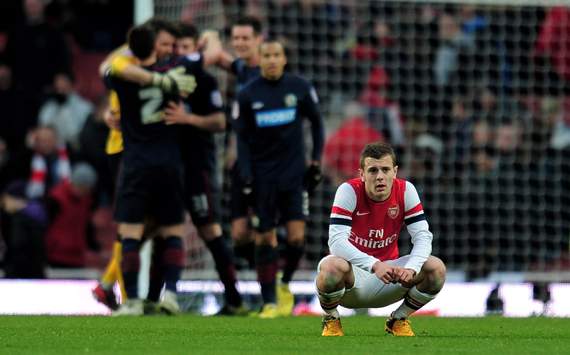
Mike Dean's final whistle was barely audible above the boos as he blew an end to Blackburn's smash and grab victory over Arsenal, leaving disgruntled supporters pouring from their seats, spitting venom and bawling expletives at the Arsenal bench. “Disgrace! Wenger has to resign after that. Disgrace!,” an especially irate supporter shouted at the press box. And he was not alone.

This was the first occasion Wenger has ever overseen a home cup defeat to a lower league club. In short, this is his lowest ebb, and one that he looks powerless to recover from.

Some will point to the nature of the defeat as proof that this was an unfortunate one-off. Arsenal dominated possession, had more shots and had a whopping 16 corners. Yet it made no difference. This is the second non-Premier League outfit the north London side have lost to this season following the hugely embarrassing loss to Bradford in the Capital One Cup.

Some will say that it was mere misfortune that Arsenal did not convert their chances into goals. They were in on goal twice – Gervinho fluffing his lines, predictably, hit the crossbar, and drew young Jake Kean into a number of magnificent saves.

But that is the minimum expectancy when Arsenal play someone like Blackburn at home. Indeed, this same fixture last year saw the Gunners win 7-1. But when the pressure is on, the problem is, and has always been, the mentality of the players Wenger calls his second string.

He spoke in the build-up to the match of rotating his squad, but in a manner meant to reassure anxious supporters: “We only have big names in our squad, so it will be a team of big names, for sure.”

Big names? Abou Diaby, one of those alleged 'big names' who underwhelmed again in midfield, called for his team-mates to show 'character' in his pre-game call to arms, but he was as guilty as the other starters of shying away from battle.

The constant emphasis on 'character', 'mentality' and 'belief' have become a weight too big to bear for many of the players. Hoodwinked or not, it is clear Wenger's players just don't believe their manager's assertion that they can rise to these occasions that require something more than the motivation of Premier League points.

There is a belief that they can tap a ball around the pitch for 90 minutes and emerge with victory, as if this really is a training match. As if Blackburn just turned up for a runaround. What Wenger does not seem to realise, is that his own superiority complex has manifested itself in the conscience of the majority of his players.

Removing all but a couple of his key players was far too big a risk to take in a game that always looked like a potential banana skin. Blackburn barely surged forward but they knew, if they could nick a goal, or hold on to their clean sheet for an hour, their opponents would get nervous, worry about the repercussions, collapse.

By the time the trio of Theo Walcott, Jack Wilshere and Santi Cazorla arrived, it was too late. The fear had already set in. Wenger got his team selection wrong today. If Wilshere and Co. were fit enough to come off the bench, they should have started the game and provided the drive and spirit required to break down a stubborn Championship team.

Taking the raw facts – Arsenal, traditionally one of the biggest clubs in England, and presently...one of the biggest clubs in England, have been eliminated from both cup competitions by lower league opposition. This would be enough for some chairmen to hand the manager his P45 – especially following seven trophyless years.

With the Bundesliga leaders arriving on Tuesday night, is it worth going through the entire autopsy again? As fans and pundits alike rally against Wenger, it is time for the Frenchman to admit that he will never get Arsenal into a position to win a trophy and bite the bullet. His time at the club is done.

CULLED FROM  www.goal.com

Friday, 15 February 2013

Truck crushes 15-year-old pupil while on teacher’s errand

Tragedy struck in front of Lafenwa Comprehensive High School, Ota, Ogun State, last Thursday, when a 15-year-old pupil, Miss Kemi Obanla, was crushed to death by a truck driver.
It was learnt that Kemi was killed while running errands for her class teacher.
It was alleged that the teacher had asked Kemi to go and buy cooked ‘ofada’ rice for her around 10am on the day.
An eyewitness, who craved anonymity, said the SS1 pupil was knocked down by a truck while crossing the road.
He said Kemi died while she was being rushed to the hospital.
 “The girl was knocked down when she was crossing the road. After hitting her, the driver of the vehicle attempted to escape but the youths around apprehended him.
“It was when the girl was being taken to the hospital that she died. When we inquired where she was going at that time, we were told her teacher, whose name was not given, sent her to buy ofada rice for her.”
The father of the deceased, Mr. Peter Obanla, said the death of his daughter, dealt a devastating blow to the family.
He said when the girl left their Ajegunle Close, off Mefun Road, Ota, home, she was full of life.
Obanla said about two hours after his daughter left for school, someone informed him that she was involved in a fatal accident.
He said, “The accident happened on Ahmaddiya Road, Ota. By the time I got there, I learnt that they had taken her to an hospital. She died on the way to the hospital.
“Since then, we are yet to come to terms with the fact that that she is dead. I still cannot believe it. Kemi was very industrious, respectful and brilliant. Her death has dealt a blow to us.”
Obanla, who works with Dangote Group of Companies as a driver in Ibeshe Plant, said the school was shielding the teacher.
“It is only the Principal of the school that has been showing up. We do not know the teacher that sent my daughter on an errand. Though many teachers from the school have been coming to our house, we do not know who among them sent her on errand on that fateful day.
“The driver that killed her and the school authorities have been begging me to drop the case. They said what happened was the will of God.”
When contacted, the Public Relations Officer, Ogun Police Command, Mr. Muyiwa Adejobi, promised to get the details of the incident.
However, as of the time of going to the press, he did not get back to our correspondent.
Subsequent efforts to speak with him were not successful as his phone rang out many times without him picking it.

CULLED FROM  www.punchng.com (february 15,2013)

Thursday, 14 February 2013

Oscar Pistorius Charged With Murder; Olympic Star Allegedly Killed Girlfriend Reeva Steenkamp

South African Olympian Oscar Pistorius, the double amputee "Blade Runner" who became one of the biggest names in world athletics, has been charged with murder.
Officials allege that he shot his girlfriend, Reeva Steenkamp, dead at his home.
Pistorius
Police said they had opened a murder case after a 30-year-old woman died at the track star's house after an incident in the Silverlakes gated complex.
"At this stage he is on his way to a district surgeon for medical examination," police brigadier Denise Beukes said outside the heavily guarded neighborhood.
Pistorius and girlfriend Reeva Steenkamp had been the only people in the house at the time of the shooting at his residence in Pretoria, Beukes said.
Police said a 9 mm pistol had been found at the scene.
"When a person has been accused of a crime like murder they look at things like testing under the figure nails, taking a blood alcohol sample, other tests," Beukes said.
Pistorius is due to appear in a Pretoria court today.
Before the murder charge was announced, Johannesburg's Talk Radio 702 said the 26-year-old may have mistaken Reeva Steenkamp for a burglar.
South Africa has some of the world's highest rates of violent crime, and many home owners have weapons to defend themselves against intruders.
In 2004, Springbok rugby player Rudi Visagie shot dead his 19-year-old daughter after he mistakenly thought she was a robber trying to steal his car.
Steenkamp, a model and regular on the South African party circuit, was reported to have been dating Pistorius for a year; there had been no signs of strife.
In fact, some of her last Twitter postings indicated she was looking forward to celebrating Valentine's Day on Thursday with the Olympic track star.
"What do you have up your sleeve for your love tomorrow???" she posted.
However, Beukes said police were aware of previous incidents of "domestic nature" and Pistorius is believed to keep an assortment of weapons in his home.
"Cricket and baseball bats lay behind the door, a pistol by his bed and a machine gun by a window," Britain's Daily Mail wrote in a profile last year.
He was arrested in 2009 for assault after slamming a door on a woman; family and friends said it was just an accident and the charges were later dropped.
Reeva Steenkamp's colleagues were distraught.
"We are all devastated. Her family is in shock," her agent, Sarita Tomlinson said. "They did have a good relationship. Nobody actually knows what happened."
Pistorius, who races wearing carbon fiber prosthetic blades after he was born without a fibula in both legs, was the first double amputee to run in the Olympics.
He reached the 400 meter semi-finals in London 2012.
Respected worldwide for triumphing over his disabilities to compete with able-bodied athletes, his sponsorship deals are thought to be worth $2 million a year.
Oscar Pistorius is sponsored by British telecoms firm BT, sunglasses maker Oakley, sports apparel maker Nike and French designer Thierry Mugler.
"We are shocked by this terrible, tragic news. We await the outcome of the South African police investigation," a BT spokeswoman said before Pistorius was charged.
A Nike spokesman said before hearing of the murder charge that the company was "saddened by the news, but we have no further comment at this stage."
Neighbors, as well as the Olympic community and world at large, expressed shock at the arrest of an athletic ambassador and all-around "good guy

CULLED FROM  http://www.thehollywoodgossip.com

The difference between Christianity and Religion:


Christianity is unique in the fact that it is the ONLY faith which is not a religion- as a 'religion'- by definition means "to be bound" by rules and regulations and rituals in order that one MAY attain salvation. (whatever their definition of salvation may be)
This is in stark contrast to the teachings of THE most anti-religious person there ever lived- Jesus the Christ.
Jesus taught that the truth would SET YOU FREE and that it would be faith ALONE in His sacrificial death and resurrection for our sins which would save us and NOT our good deeds.

"For it is by God's grace that you have been saved, through faith. It is not the result of your own efforts, but God's GIFT, so that no one can boast about it." (Ephesians 2: 8-9)

This means that (although good in themselves and recommended) it is NOT by attending 'church', being
baptised** or even believing in God! (Satan is not an atheist himself!)
To put it plainly: We are saved by faith and DEMONSTRATED by good works-
but it isn't the works themselves that actually save us.

"His choice is based on His grace, not on what they have done. For if God's choice was based on what people do, then His grace would not be real grace." (Romans 11:6)

You see, religion is humanity trying to reach God by their own efforts..whilst Christianity is God paying the price Himself- in essence- reaching down to us..it is a RELATIONSHIP with our creator.

Still not convinced? Has religion still got a strangle-hold on you?..then consider Isaiah 64:6 :

"ALL of us have become like one who is unclean, and all our righteous acts are like filthy rags."

Did you note that it isn't just our sins that are filthy to God..but even our RIGHTOUSNESS? You see, Gods standard is HIMSELF, who is THE epitome of Holiness and purity.

"God is Light and in Him there is no darkness at all" (1John 1:5) So, to a pure a Holy and perfect God, ANY sin/darkness would naturally be alien and repugnant to Him..so, humanly speaking, it IS impossible for us to be saved..THAT is why God demonstrated His love for us by coming down in human form as the Lord Jesus Christ.

The 10 commandments and other laws were designed to show us that we are sinners..there is NO way any human could keep all of them-

For example: How many things do you have to steal (regardless of value) in order to be a thief?
-Just one.
How many lies do you have to tell (no matter how ‘big’ or ‘small’ it is) to be a liar?
- Just one.
So how many sins does it take for us to be a sinner?
-Just one.

These were just two of the ten commandments..and every one of us has broken them all!
Furthermore "For whoever shall keep the whole law and stumble in one point, he is guilty of all. (James 2:10)

Therefore, if you are trying to live by the law and fail just once you shall die by it- for it is humanly impossible to keep. That is the very reason the Jews had to continuously offer sacrifices as substitution for their own lives. But the blood of bulls and goats weren’t sufficient to take sin away entirely.

Since every single person is a sinner, that is, we have all rebelled against God's wishes, so, every single person is doomed to an eternity in hell- separated from light and love- forever.
It doesn't have to be this way though- God loves us so much that He supplied a solution.

"For the wages of sin is death, but the gift of God is eternal life in Christ Jesus our Lord" (Romans 6:23)

Men die because they sin. If one was perfect they would not then die. The very fact that Jesus Christ rose from the dead (this is a historical fact) proves that all our sins were paid for. Romans 4:25 tells us that if just one sin wasn’t taken care of, Christ would still be in the grave for all to see.

Jesus, being God AND man, was the ONLY one who could be perfect and keep the commandments- and since He did- He satisfied The Law and then on the cross He bore the punishment of our sins- ALL OF THEM, past, present and future, died and then rose again to show that He had
conquered death for us and as a promise to all those who trust in His sacrifice for our sins- that they too will rise from the dead and into eternity with God. This is the gospel.

**Note on baptism- Baptism is important, but it does not save us- it was the shed blood of Christ which accomplished this. Baptism is the New Testament signification of God's New Covenant (Testament) with Man as
circumcision was to the Old Covenant (Testament) representing our spiritual death, burial and resurrection in Christ.

Nigeria’s present Leadership: The Worst offspring of Lugard’s Predictions

Although Frederick Lugard’s curse-prediction/definition of the characteristics of the several ethnic groups which Britain eventually compelled into the near-century shame called Nigeria has been the discourse of several analysts for years; it however became resounding as Nigeria culminates towards its inevitable doom. I personally believe that every word needed to address the foundation of Nigeria has been released, but seeing that those leaders who have personally passed judgment upon themselves have not really come to terms (maybe because they have truly come to accept Lugard’s prophecy of doom as their destiny) with the irrevocable gravity of their many offences, I have decided to relate to them once more as they bask in the illusory euphoria of mere games – football games.
To make myself clear, I’d start with the first paragraph of the said Lord Frederick Lugard’s judgment of/on those he, in the pleasure of immorality with his mistress, named Nigeria:
"In character and temperament, the typical African of this race-type is a happy, thriftless, excitable person, LACKING IN SELF-CONTROL, DISCIPLINE, AND FORESIGHT. Naturally courageous, and naturally courteous and polite, full of personal vanity, with little sense of veracity, fond of music and loving weapons as an oriental loves jewelry. HIS THOUGHTS ARE CONCENTRATED ON THE EVENTS AND FEELINGS OF THE MOMENT, and he suffers little from the apprehension for the future or grief for the past. His mind is far nearer to the animal world than that of the European or Asiatic, and exhibits something of the animals’ placidity and want of desire to rise beyond the State he has reached. Through the ages THE AFRICAN APPEARS TO HAVE EVOLVED NO ORGANIZED RELIGIOUS CREED, and though some tribes appear to believe in a deity, the religious sense seldom rises above pantheistic animalism and seems more often to take the form of a vague dread of the supernatural."
Deducing from Lugard’s description of our forefathers and their offspring above, what he, and by extension Briton, actually believe Nigerians to be are: Animals in human form, who waste whatever future there may be for the pleasure of today; who lack the ability to discern or plan for the future; who believe that the law is for self-endowment on those who can afford it just as the rich can afford diamonds, and a curse on those who cannot; who are the least of humans in all societies of the world; who never had any understanding of a true God (that, according to Lugard, should not be dreaded) except that they constantly live in fear.
Well, at this point, I’ll have to give credit to this man who mastered what destiny the country he was about creating would have. Although his predictions were made public in 1926 in a book called Dual Mandate, his assessments happened before the amalgamation of 1914. Many have got it wrong in that they actually believed that this Lord of a Brit, through his descriptions, was referring to the peoples he met before the immoral amalgamation. No! He was, instead, predicting the outcome of Britain’s determination to bring peoples with quintessentially divergent destinies together as one country. He took his time to pen what he foresaw as the outcome of Her Majesty’s decision. Possibly too, he could have advised the British authority against the amalgamation before it was carried out, although many Nigeria would still have it that he gathered generations of warriors and ancestral think-thank together single-handedly into an impossible compulsion and gave it a name: Nigeria.
There are no ethnic or racial groups in the entire world without their history of ‘the ignorant days;’ those bound under Nigeria had theirs too before the British invaded them. However, without Britain’s bloodied-interference in the lives of the people which today are called Nigerians, it’s possibility today would have seen Europeans struggling (and dying en route as well) to enter Africa as Africans have been doing and still do to date in flight to Europe – to their detriment. In other words, the prediction of Lugard could well have been realized in Europe in general and Britain in particular.
Nevertheless, I am dealing with the present leadership in Nigeria and how it clearly manifests the true nature of Lugard’s vision.
Good enough for those who love soccer games, Nigeria, on Sunday, February 10, 2013, won its first Africa Cup of Nations title since 1994. The country celebrated it in grand styles to the point that many even died in the euphoria of “winning.” The presidency celebrated this victory too. But the attitude of Nigeria’s senators and Reps as they eagerly awaited soccer victory, and especially, the president’s impulsive and barbaric reaction to this soccer victory, leaves much to be desired. If anything, it clearly reveals the soul of the Nigeria which Frederick Lugard amalgamated: A bunch of animal-like and child-like leaders who dance for toys but reject toy-making factories.
According to the February 13, 2013 headline of Daily Post Nigeria (and indeed several other Nigerian newspapers), the incumbent president of Nigeria, Goodluck Jonathan, BSC, PHD, GCFR, BNER, GCON, perhaps in celebrating his utmost national achievement of having won a mere Africa recreational trophy, awarded/rewarded the players and officials of Super Eagles’ team with national honors, cash and plots of land in Abuja. To all who carry the soul of Lugard’s curse/prediction, this soccer-victory pleasure is all there is for these far-nearer-to-the-animal-world Nigerians to be happy for the day. As far as the presidency is concerned, it has given Nigerians all they wanted – all they ever needed. Here we see the culture of a thriftless, excitable, animal-like leadership in display. While they have destroyed and continue to destroy the houses of struggling and peaceful Nigerians all over Abuja/Nigeria without providing alternatives for them, they are throwing away plots of these very land, along with money, to those whose work bring nothing to Nigerians’ table, save the very soul of Lugard and his curse: thriftless and carefree wastages. What more could explain this show of bestial love? To Nigeria’s soul and leadership, a game victory equals spraying of unaccountable/unaccounted-for cash and plots of lands! To all who have bowed to the destructive spirit of Nigeria’s amalgamation, what the presidency did was simply customary and in line with our heredity. But to all who have sworn neither to walk in the destructive path which Britain and their son, Lugard, has set for Africans nor to let their children wallow in such destructive ignorance, the action of the presidency invites goose bumps and a shudder of rejection from/by all.
Finally, it’s no longer a question of if Nigeria is ripe for dissolution or a question of willingness; it’s a question of choosing life, future and destiny between the curse with which the maker of Nigeria, Lugard, has purposed to curse all who bear this name and the destiny which we shall determine for our individual selves, our ethnic groups and our posterity in line with God’s will for creation. Even now, that prediction has born much unpleasant fruits. But for me and my house, neither the curse of Lugard nor its fruits thereof in Nigeria will ever be acceptable, no matter how it is constantly compelled.

CULLED FROM    www.nigeriamasterweb.com

Things fall apart in Tanzania: on media manipulation and hypocrisy – By Edward Clay

A Tanzanian journalist, who won an award for journalists of exceptional potential enabling him to work for British newspapers in 2009, gave evidence for the defendant in November 2012 in a libel trial in London brought by a Tanzanian media magnate, Reginald Mengi. Mr Mengi lost his libel suit, and hefty costs.
Erick Kabendera, now aged 33, worked on The Times and Independent under arrangements of the David Astor Journalism Awards Trust in 2009.
His home in Tanzania has been burgled three times in recent months, and Tanzanian officials have interrogated his elderly parents about their right to be Tanzanian citizens; officials said their son was under scrutiny for selling secrets to European powers and should be more ‘humble’.
Mr R Mengi is executive chairman of IPP Limited, well-connected and very prominent in Tanzania. He presents himself as a philanthropist and opponent of corruption. His flagship newspaper is The Guardian of Tanzania, for which Mr Kabendera worked in 2009 when he won his Astor award.
Mr Mengi is also a member of the Commonwealth Business Council which is committed to promoting good business practice in Commonwealth countries.
He is the older brother of Benjamin Mengi, another prominent businessman. In 2004- 5, Benjamin Mengi made a legal lease of land to two British private investors in Tanzania, Stewart Middleton and Sarah Hermitage, and then welched on the deal.
The Middletons were harassed and intimidated by officials; denied proper protection of the law, they and their staff were mistreated and their farm despoiled. They were forced to flee Tanzania in fear of their lives in 2008. Benjamin Mengi then took possession of the land.
In seeking recompense for their illegal treatment and the loss of their investment, Sarah Hermitage alleged that some of Mr R Mengi’s papers supported their mistreatment with hostile and defamatory allegations. Reginald Mengi denied during the trial of his libel suit against Hermitage that he was responsible for the editorial content of his newspapers. Erick Kabendera, his former employee, testified in support of contrary evidence, showing there was such interference.
R Mengi lost his suit. He was held to have been complicit in his brother’s corruption and intimidation; and to have brought misleading and untrue evidence before the Judge in pursuing his oppressive litigation.
***
Successive British High Commissioners to Tanzania have been sympathetic to the Middletons. In contrast, Ministers in the Coalition government have turned their backs on their travails. The then International Development Secretary , Andrew Mitchell, assured the Chairman of the Lords’ Select Committee on Economic Affairs, Lord MacGregor, in testimony to the Committee in 2011, that ministers had made repeated representations on behalf of the Middletons, and “..would continue to raise this disturbing case with the Tanzanian government whenever the appropriate opportunity arises.”
In fact, Freedom of Information enquiries of the three relevant government departments – FCO, DBIS and DfID – to test this assertion, elicited no evidence that Coalition ministers had ever raised the issues.
***
DfID’s programmes for Tanzania over the five years to 2015 include spending £34 million on helping civil society and the media to hold the government to account; and a further £20 million to improve the ability of institutions like the judiciary and police to fight corruption.
IPP Media reported on 7 February that the Tanzanian President, Jakaya Kikwete, said on his country’s National Law Day that people should safeguard and promote justice by helping the law enforcement agencies. IPP Media reported him to have added:
“…[they] should always learn how to use legal institutions such as courts to secure their rights and stop taking law into their own hands, even if a person was suspected to have committed an offense.”
It was announced this week that the government had started distributing Tanzania’s new ID cards for citizens. That makes more sinister the interrogation of Kabendera’s parents about their citizenship.
Last September, a TV journalist was killed during clashes between opposition party supporters and police. In January 2013, another journalist was found murdered in unexplained circumstances.
The government has also delayed for further consultation a freedom of information bill.
Evidence given in R Mengi’s lost libel case showed that editors were instructed not to comment on President Kikwete without clearance from management.
Will British ministers express their concern and demand a full, independent and open enquiry into the persecution of Erick Kabendera and his family?
He acted bravely in giving evidence for the defence in a British court.
In the process will they also protest over the treatment suffered by two British citizens in Tanzania at the hands of prominent businessmen, supported by the media organs of one of them, and the misbehaviour of State institutions which should have protected their rights?
If British ministers ignore abuse of the rights of British citizens in another country, they condone abuses of the rights of citizens of that country. Meanwhile, the returns on DfID’s investments in civil society, media and the rule of law in Tanzania seem doubtful.
Sir Edward Clay is former British High Commissioner to Kenya, Uganda and non-resident Ambassador to Rwanda and Burundi.


culled from     http://africanarguments.org

Tuesday, 12 February 2013

Nigeria arrests journalists over polio worker killings

Three Nigerian journalists have been arrested for inciting violence by saying on a radio show that polio immunizations were an anti-Islam Western conspiracy, just days before health workers administering the vaccines were killed.
Gunmen on motorbikes shot dead the nine health workers in two separate attacks in Nigeria's main northern city of Kano on Friday.
No one claimed responsibility but Islamist militant group Boko Haram, a sect that has condemned the use of Western education, has been blamed for carrying out a spate of assaults on security forces in the city.
Kano Police Chief Ibrahim Idris told Reuters on Monday three journalists from Wazobia FM had been detained after they said on their show on Wednesday that immunization against polio was anti-Islam and a Western conspiracy to cause infertility in women.
Some influential Muslim leaders in Kano openly oppose the vaccinations for the same reasons.
The killings could hamper efforts by global health organizations to clear Nigeria's mostly Muslim north of the virus that can cause irreversible paralysis within hours of infection.
Polio crippled thousands of people every year in rich nations until the 1950s. As a result of vaccination, it is now only endemic in three countries - Nigeria, Afghanistan and Pakistan.
According to the World Health Organisation, there were 121 new cases of polio in Nigeria last year, compared to 58 in Pakistan and 37 in Afghanistan.
In 2003, northern Nigeria's Muslim leaders opposed polio vaccinations, saying then they could cause infertility and AIDS.
Their campaign against the treatments was blamed for a resurgence of the disease in parts of Nigeria and other African countries previously declared polio-free.

WELCOME TO IYKE NMEZI'S BLOG.: Africa’s rising rage: the middle classes call for ...

WELCOME TO IYKE NMEZI'S BLOG.: Africa’s rising rage: the middle classes call for ...: Africa’s rising rage: the middle classes call for revolution – By Richard Dowden February 7, 2013 I had not intended to come back t...

Africa’s rising rage: the middle classes call for revolution – By Richard Dowden

I had not intended to come back to the Africa Rising debate for a while. But on my recent trip to Nigeria, Kenya, Tanzania and Uganda I was shocked at how angry the young professionals are. These are highly educated, ambitious young men and women who could be found working in the corporate sector anywhere in the world. They should be taking Africa to the Promised Land. Instead I found them frustrated and furious with many calling for coups and revolutions.
Coming from London where we had been basking in a warm bath of Afro-optimism, I had expected to find a similar feeling in Africa itself. Growth has remained strong despite the economic problems in Europe, Africa’s biggest trading partner, and the prices for the continent’s abundant commodities have remained high. Governance is said to be improving.
There is no doubt that Africa has come a very long way from where it was in the 1980s and 90s. My prime piece of evidence for that is traffic jams. At that time you could drive into Nairobi, Kampala or Johannesburg at any hour and rarely be held up by anything except a red light. Now you have to leave hours earlier to be sure of getting into the city centre on time. Outside the towns and cities you can now actually drive in a straight line on many roads. As they used to say of the potholes in Uganda: “if you see a man driving in a straight line you know he must be drunk.”
But the questions about Africa’s dozen years of strong economic growth remain:
Firstly, has Africa’s growth been driven by a long commodity boom or is it now self-sustaining? Where is the large scale manufacturing?
Secondly, has governance really improved? Are the figures about numbers in school, clinics being built, power, water and sanitation delivered true?
Thirdly, are there two Africas? One in a bubble of western-style wealth inhabited by the rich and powerful and another Africa on the other side of the security fence – barefoot, one torn shirt, no money, no prospect of a job – “suffering and smiling” as Fela Kuti sang, but with big and increasingly angry eyes.
What shocked me in Lagos, Uganda and Nairobi was the fury of the young middle classes – the very people who are supposed to driving the new Africa into the 21st century. They were angry about the poor levels of education, about the lack of electricity, but above all about corruption at the very top. And they see the growing ranks of ill-educated, unemployable young people being churned out of badly-managed state education systems.
In Nigeria they have all but  given up on the government. But what about people like Lamido Sanusi, the Governor of the Central Bank, and Nkonjo Iweala, the Finance Minister? I pleaded. Their reply was: of course they do what they can but their space is limited. They are not allowed anywhere near the real money – the oil. That, I was told, was managed in complete secrecy by President Goodluck Jonathan and the Vice President and the oil minister, Ms Diesani Alison-Madueke. They are filling a huge war chest so that Jonathan can run for president again in 2015.
Two remarks struck me. One was how utterly out of touch the President is. When street protests broke out a year ago in reaction to the sudden removal of the fuel subsidy, he claimed that people were being paid to demonstrate. My informant pointed out that all the evidence was that people had reacted in spontaneous fury to the government’s removal of the only benefit it delivers to the Nigerian people. Yes, the only one.
One said: “I am extremely optimistic about the future of Nigeria – once there has been a revolution and the current ruling elite is removed”. No one in the room showed dissent or even surprise.
In Uganda the entire middle class – except for those in government – realize that the country is heading for a crash or a coup. Even President Yoweri Museveni himself warned that if his own ruling party does not stop bickering the army may step in. That is the most extraordinary statement I have ever heard from an African president. The reaction of many Ugandans (under their breath) was: “bring it on”.
Museveni has stayed too long and he has cultivated no obvious successor. He is trapped, talking now about installing his deeply unpopular wife and or his son in his place. 27 years ago he did a good job and ruled well (except in the north) and this lasted for a decade. But now he has turned into the very president he criticized so severely as a young man – the one who stays too long in power.
Meanwhile, in Nairobi the population is battening down the hatches for the election next month. Most are optimistic that their new constitution will curtail the worst excesses of the professional politicians, although these people still made up about 80 percent of the winners in the recent party primaries.
So where exactly is The New Africa flourishing? Botswana? But it was always successful and never suffered from the political and economic catastrophes that hit Africa in the 20th century.
The fact is that the five big African countries: Egypt, Nigeria, South Africa, Angola and the Democratic Republic of Congo are in political turmoil or stasis. None of their governments have the vision or the capacity to position their countries to develop rapidly and sustainably as Indonesia, Malaysia and China have. The good things that are happening in many African countries – with the possible exception of South Africa – are happening in spite of their governments, not because of them.
Secondly, two of the most successful countries in terms of human development – Ethiopia and Rwanda – are dictatorships which allow minimum democracy and freedom of speech. This makes it difficult for Western governments to support them. Aid has been cut to Rwanda and if the next election in Ethiopia is not free and transparent, Western allies and donors may have to turn a blind eye or step away.
Some countries are doing reasonably well: Ghana, Senegal, Namibia and Zambia are OK. Cameroon and Gabon are quiet but not dynamic, still run by small wealthy elites who do not spread the new wealth. Cote d’Ivoire has emerged from its civil war and Somalia may bounce back quickly if the new government is strong enough to crush al-Shabaab and smart enough to manage clan politics. But meanwhile Mali, a former favourite of western countries, has imploded and both Sudans are in an increasingly bad way. It is hard to imagine Mauritania, Niger and Chad will not also be affected by Islamic militancy.
China has been the main player in Africa’s economic transformation, but how long will it be before Africans react against the growing power and exclusive behaviour of the Chinese and their total disregard for Africa’s environment and culture?
Africa rising? Bits of it yes, but watch out for Africans’ rising anger.

CULLED FROM www.africanarguements.org

I can stop 'best in the world' Ronaldo, insists Manchester United


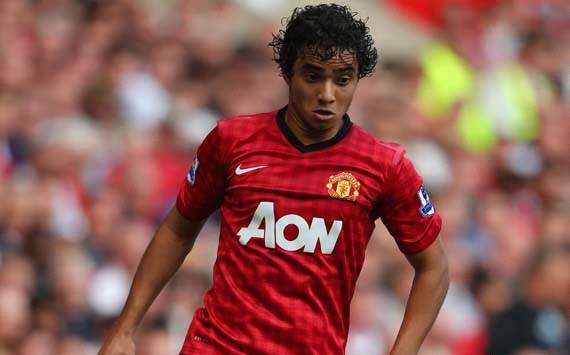
I can stop 'best in the world' Ronaldo, insists Manchester United defender Rafael


The 22-year-old right-back has praised his former team-mate ahead of their Champions League clash on Wednesday, and believes the Real Madrid forward is better than Lionel Messi
Manchester United right-back Rafael believes Cristiano Ronaldo is the best player in the world – but insists he knows how to stop the Real Madrid star.
The Portugal forward has 36 goals in 35 appearances for los Blancos this term, and has netted a sensational 182 in 179 games since his €96 million move from the Red Devils in 2009.

Despite Ronaldo’s scintillating form in front of goal for the Liga giants, his former team-mate says his time spent training against the 28-year-old will give him a vital edge on Wednesday night.

"For me, [Ronaldo is] the best player in the world," he told The Sun. "I think he is the complete player and I really like him. I think he is the number one.

"I know what he can do because I played and trained with him a lot. So he's not the type of opponent where you would say 'He is good but I don’t know what he can do' - I know what he can do."

With Rafael performing well against Gareth Bale during United's recent 1-1 draw with Tottenham at White Hart Lane, the defender suggested concentration is key to keeping out top-class players in big games.

"If you concentrate, that’s the key, reading the game," he continued. "[Ronaldo and Bale] are both very quick but maybe they are just different. Ronaldo is right-footed and plays a different type of game.

"He can come inside and shoot with power but both of them are tough players to come up against."

Sir Alex Ferguson has sung the full-back's praises of late, and suggests competition for places is driving the side on to succeed this season after increasing their lead at the top of the Premier League to 12 points.

"I like it when I hear Sir Alex Ferguson or Rio [Ferdinand] saying these things about me," he added. "It's nice and I hope I can keep going. It's important to get the team medals first of all because, if you get them, then the other personal things are going to come as well.

"If everyone is fit we have two teams - two good teams. So if we can split it sometimes, players can get a rest and stay fresh. That is always a good point for us - if everyone is fit we definitely have a good squad."

CULLED FROM www.goal.com

Saturday, 9 February 2013

Mancini slams City performance

Manchester City manager Roberto Mancini accused his players of showing a lack of strength and personality after Saturday evening's 3-1 loss at Southampton, and feels his side now have only a ten per cent chance of retaining the Premier League title.
Manchester City woe Southampton
GettyImagesManchester City suffered a 3-1 loss at Southampton to leave their title charge hanging by a thread
Inexplicable mistakes by Joe Hart and Gareth Barry helped the Saints achieve their first win under Mauricio Pochettino in style.
Hart could have possibly done better with the shot that led to Jason Puncheon's opener, and there was no doubting the England goalkeeper's culpability for Steven Davis' bundled second goal for the hosts.
Edin Dzeko reduced the deficit as half-time approached, but soon after the break Southampton's two-goal cushion was restored as Barry passed into his own goal unchallenged.
"I am disappointed with our performance. They deserved to win,'' Mancini said on ESPN. "We didn't play well. We conceded a goal that I have never seen in my life. That's it. Now we can do nothing - only say congratulations to Southampton for their performance. I think (the players) understand that we played really bad. I think it's the worst game in the last two or three years, maybe.
"We're missing Vinny (Kompany) and missing (Matija) Nastasic, and we have some players who are not in form. They played really bad - without strength, without personality. I'm very disappointed in them.''
Asked what this defeat meant for his team's title chances, he replied: "We have ten per cent, maybe.''
Southampton striker Rickie Lambert felt his team were worthy winners against the defending champions.
"I think it's our best performance (of the season),'' he said on ESPN. "We were absolutely superb today and got exactly what we deserved. We looked for the early goal and looked to put them under pressure early and hope to capitalise on it. It worked perfectly. Then we went 2-0 up, which was even better.''
The margin of victory could have been even greater had referee Martin Atkinson not waved away Jay Rodriguez's penalty appeals on the stroke of half-time.
Man of the match Rodriguez said: "I ran in and I think there was a little nudge, but the referee hasn't given it so we got on with the game.''
He added: "We press hard, took the game to them. As you can see, it creates chances and puts us on the front foot. We've taken to it well and put in a great performance.''

Information from the Press Association was used in this report

CANCER – AFRICA’S TICKING TIME BOMB!!!!

http://www.thenewsnest.com/cancer-africas-ticking-time-bomb/