Sunday, 24 November 2013

HISTORICAL AGREEMENT

 
Iran has agreed to curb some of its nuclear activities in return for about $7bn (£4.3bn) in sanctions relief, after days of intense talks in Geneva.
US President Barack Obama welcomed the deal, saying it included "substantial limitations which will help prevent Iran from building a nuclear weapon".
Iran agreed to give better access to inspectors and halt some of its work on uranium enrichment.
President Hassan Rouhani said the deal recognised Iran's nuclear "rights".
But he repeated, in a nationwide broadcast, that his country would never seek a nuclear weapon.
Tehran denies repeated claims by Western governments that it is seeking to develop nuclear weapons. It insists it must be allowed to enrich uranium to use in power stations.
The first announcement of the most important agreement between Iran and the West in more than a decade was made on Twitter. Shortly before three in the morning in Geneva, the EU posted: "We have reached agreement between the E3+3 and Iran." Minutes later, Iran's chief negotiator, Mohammad Javad Zarif followed: "We have reached an agreement."
The immediate origins of this deal date to 14 June 2013, when Hassan Rouhani was elected president of Iran. Mr Rouhani promised to end his country's repeated confrontations with the outside world, beginning with the argument over its nuclear programme.
To bring about a deal, Mr Rouhani pursued two key policies. Firstly, he secured the public backing of Supreme Leader Ayatollah Ali Khamenei for his diplomatic efforts. Secondly, the new president and his foreign minister broke precedent and pursued direct high-level contact with Iran's long time enemy, the US.
If there is to be a lasting nuclear agreement, it may spring from a reconciliation between these two countries.
The deal comes just months after Iran elected Mr Rouhani - regarded as a relative moderate - as its new president, in place of the hard-line Mahmoud Ahmadinejad.
It has also been backed by Iran's Supreme leader Ayatollah Ali Khamenei.
After four days of negotiations, representatives of the so-called P5+1 group of nations - the US, the UK, Russia, China, France and Germany - reached an agreement with Iran in the early hours of Sunday.
The specifics of the deal have yet to be released, but negotiators indicated the broad outlines:
  • Iran will stop enriching uranium beyond 5%, the level at which it can be used for weapons research, and reduce its stockpile of uranium enriched beyond this point
  • Iran will give greater access to inspectors including daily access at Natanz and Fordo nuclear sites
  • In return, there will be no new nuclear-related sanctions for six months
  • Iran will also receive sanctions relief worth about $7bn (£4.3bn) on sectors including precious metals
US Secretary of State John Kerry said the agreement would make the region safer for its allies, including Israel.
But the Israeli Prime Minister Benjamin Netanyahu told his cabinet it was a "historic mistake" and that his country reserved the right to defend itself.
"Today the world became a much more dangerous place because the most dangerous regime in the world made a significant step in obtaining the most dangerous weapons in the world," he said.
The Israeli comments came as it was revealed that the US and Iran had held a series of face-to-face talks over the past year that were kept secret even from their allies.
Iran's Foreign Minister Mohammad Javad Zarif said it was an opportunity for the "removal of any doubts about the exclusively peaceful nature of Iran's nuclear programme".
President Hassan Rouhani said the deal recognised Iran's nuclear "rights"
But he insisted that Iran had not given up its right to enrich uranium.
"We believe that the current agreement, the current plan of action as we call it, in two distinct places has a very clear reference to the fact that Iranian enrichment programme will continue and will be a part of any agreement, now and in the future," he said.
The US denied any such right had been conceded, while UK Foreign Secretary William Hague said the agreement was "good news for the whole world".
'Significant agreement' The US state department gave more details of the deal, insisting that most sanctions would remain in place.
Restrictions on Iran's petrochemical exports and some other sectors would be suspended, bringing in $1.5bn in revenue.
Obama: "Agreed to provide Iran with modest relief"
But Mr Obama warned that if Iran fail to keep its commitments, "we will turn off the relief and ratchet up the pressure".
This deal may be the most significant agreement between the world powers and Iran for a decade, says the BBC's James Reynolds in Geneva.
Negotiators had been working since Wednesday to reach an agreement that was acceptable to both sides.
As hopes of a deal grew stronger, foreign ministers of the P5+1 joined them in Geneva.
But it only became clear that a breakthrough had been made in Geneva shortly before 03:00 local time (02:00 GMT) on Sunday

SOURCE: www.bbc.co.uk

Friday, 22 November 2013

Nov. 22, 1963, a date Dallas will never truly get beyond


Fifty years is a relative blip on the grand timeline, barely a rounding error between your genesis point and the end of life as we know it. Yet in human terms, 50 years is longer than many life spans, past and present.
In Dallas terms, 50 years is five decades of exploration, examination and grinding introspection about what happened, and why, on Nov. 22, 1963, in Dealey Plaza.
John F. Kennedy’s slaying was a seminal event in our city’s history, encapsulating too much that came before and influencing much that would follow, and here we are. We have considered it, studied it, reflected and grieved.
It’s tempting to acquiesce after all these years, to step away from the pain and sadness and horror of a president’s murder on our streets, and say, finally: “Enough. We are past that now.”
That many of us have obsessed about this single moment for so long says something. Dallas today bears little resemblance to 1963 Dallas. Divisions and demarcations, fading away by the decade, were stark. Today’s politics may have troubling elements, but they are a shallow dive compared with the dangerous extremism then.
“City of Hate” was not meant as an irony. It wasn’t an entire city, far from it, but certainly a part. With 50 years of hindsight, calling Dallas the city that killed Kennedy was neither fair nor accurate, given the lack of evidence that anyone other than a troubled loner was involved. Yet the allegation wasn’t that Dallas pulled the trigger, necessarily, but whether such a heinous crime could have happened anywhere else.
In truth, few 1963 U.S. cities would bear up well under scrutiny from 2013 eyes. America changed, and Dallas changed with it — more than many cities, perhaps, because it had a longer way to go. On balance, this has been a positive drawn from our introspection.
Another is the openness of our rumination. The events today in Dealey Plaza, remembering the 50th anniversary of a president’s death, are years in the making. City leaders, elected and unelected, have weighed competing priorities to find an appropriate ceremony that, importantly, strikes the right tone.
Despite what some outsiders might argue, Dallas has not shied away from hard questions. This, too, says something important about our city, even if fewer than 10 percent of its residents today were here on Nov. 22, 1963. This story, this event, belongs to all of us.
Which is why Dallas will resist the temptation to simply move beyond this moment, if that means shoving it onto some forgotten bookshelf.
A president was killed here for reasons that died with his killer. It does us no good to pretend this didn’t happen 50 years ago. From this terrible day and all the ones that follow, we will keep learning about ourselves and our city.

SOURCE: http://www.dallasnews.com

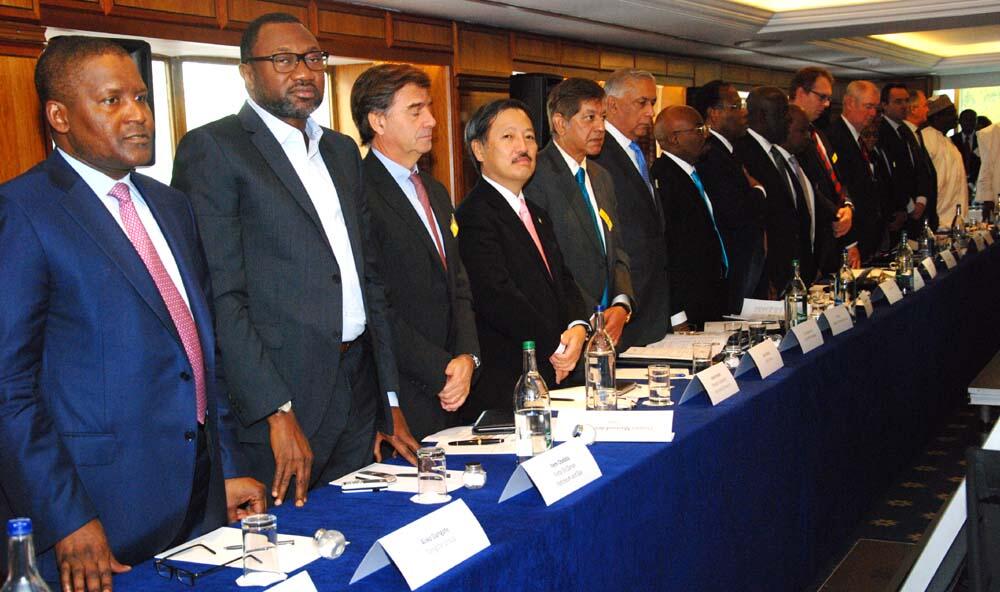
AT HIIC MEETING IN LONDON, PRESIDENT JONATHAN SAYS FG WILL CONTINUE TO IMPLEMENT BOLD AND COURAGEOUS REFORMS

STATE HOUSE PRESS RELEASE

AT HIIC MEETING IN LONDON, PRESIDENT JONATHAN SAYS FG WILL CONTINUE TO IMPLEMENT BOLD AND COURAGEOUS REFORMS

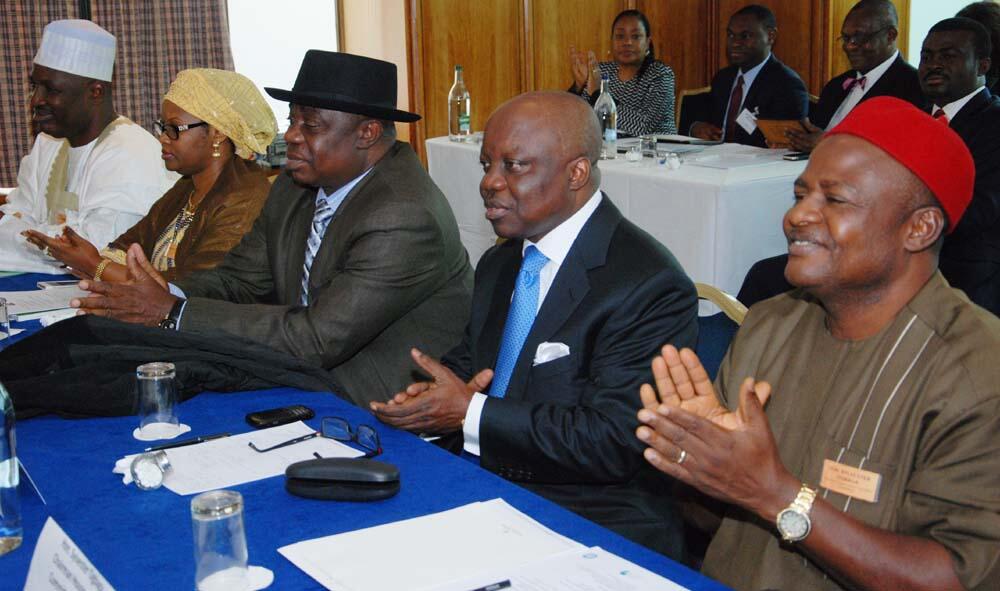
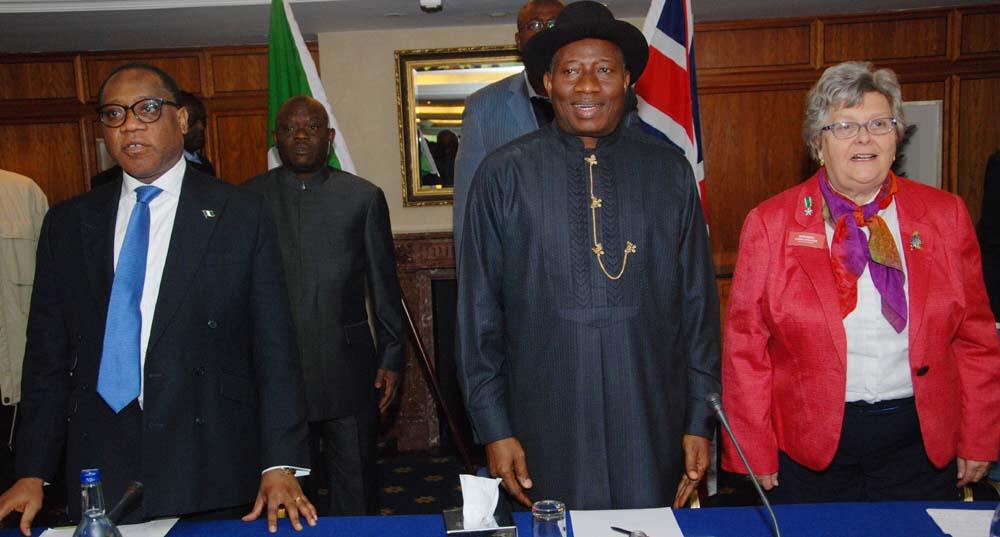
President Goodluck Jonathan addressed the ongoing meeting of Nigeria's Honourary International Investors' Council Friday in London having made a speedy recovery from the indisposition he experienced yesterday.

After apologising to the council members for his absence yesterday, President Jonathan said that his administration has attained significant momentum on the drive to attract new investors into the country and will continue to encourage existing investors within the country to expand.

"In 2014, we must not lose this momentum, but rather broaden our interventions to address other difficult issues like the high cost of financing in the country, and the dearth of adequate skills.

"This 15th meeting builds on the last conversation we had in Abuja and begins to address the fundamental issues constraining competitiveness and investment in Nigeria. Competitiveness ultimately drives profitability, which is what investors are seeking worldwide.

"To be competitive, we must address long standing issues, and introduce bold and courageous reforms, regardless of short term political pressures. This is why my government has remained steadfast in making Nigeria the preferred location for investors to do business, because it is our only pathway to create jobs, generate wealth, and guarantee our security.

"In building a truly competitive environment for business, we are addressing the fundamental issues such as internal security and power supply head-on. For the first time in Nigeria's 53 year history, we have successfully privatized the electric power industry.

"We are bringing capital, technology, and operational excellence into the sector. As a result, 11 distribution companies, and four (4) generation companies have been privatized, realising over US$3 billion for Government.  For Council’s information the assets were finally handed over on 1st November, 2013. 

"I am delighted to inform you that investors are responding positively to the opportunities in the sector and we expect to see significant investments in the sector and across the value chain going forward. Ladies and Gentlemen, resolving the power sector alone, completely changes the paradigm on doing business in Nigeria, and we are satisfied with the progress made.

"Equally, although challenges remain, we are investing in the requisite security infrastructure and intelligence network that will enable us deal more effectively with the new threats we face which can and do hamper investor confidence in our economy.

"In ensuring that the environment is suitable for investment, we will also continue to intensify the fight against corruption. We are indeed happy that the private sector has begun complementing our strong desire to tackle all forms of rent seeking tendencies. The “Clean Business Nigeria Today” initiative coming from the meetings of the Council is a very good example.

"I also use this opportunity to inform Council that Nigeria will be hosting the World Economic Forum on Africa, between the 7th and 9thof May 2014.

"Our hosting this event is yet again a strong sign of Nigeria’s central economic and political role on the continent. The forthcoming World Economic Forum will be used to shape matters of inclusive growth on the continent, and I invite all members of Council to join us in Abuja in May 2014," President Jonathan told members of the council.

The President participated in a discussion of the presentation by the Minister of Communications Technology on the development of ICT infrastructure in Nigeria.

He was also briefed on the council's deliberations yesterday on measures to secure additional sources of financing for essential development projects in Nigeria.

Baroness Lynda Chalker who coordinates the council, told President Jonathan that its members felt much more positive about the opening up of investment opportunities in Nigeria.

She said that the attendance at the ongoing meeting of the Council was the highest ever in its history and that its members were very excited about the emerging potentials of the Nigerian economy.


Reuben Abati

Special Adviser to the President

(Media & Publicity)

November 22, 2013
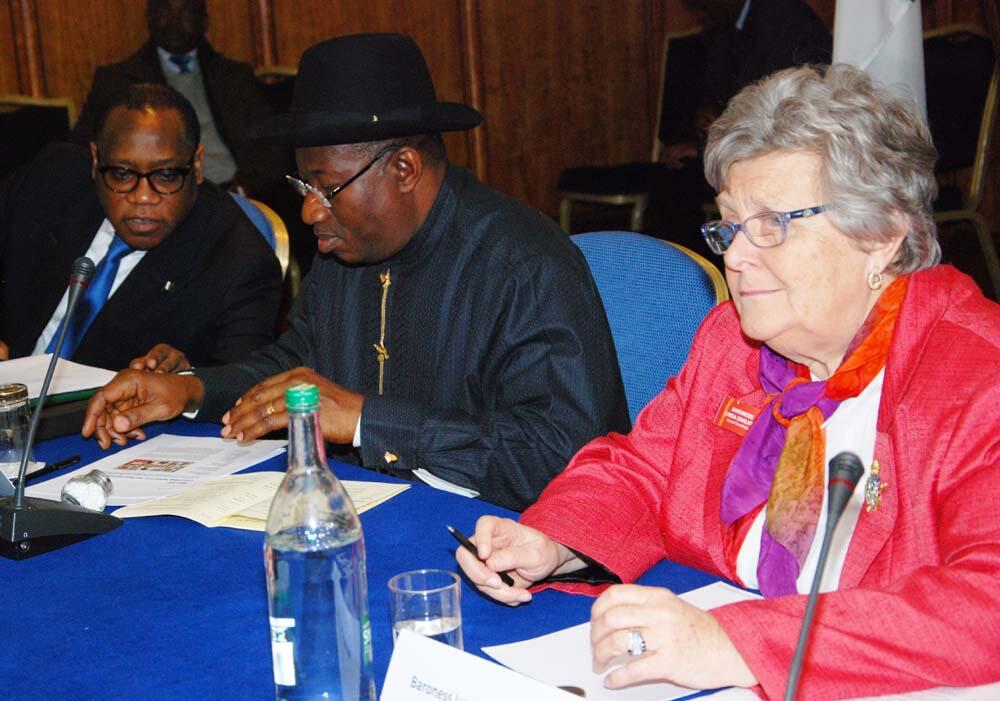
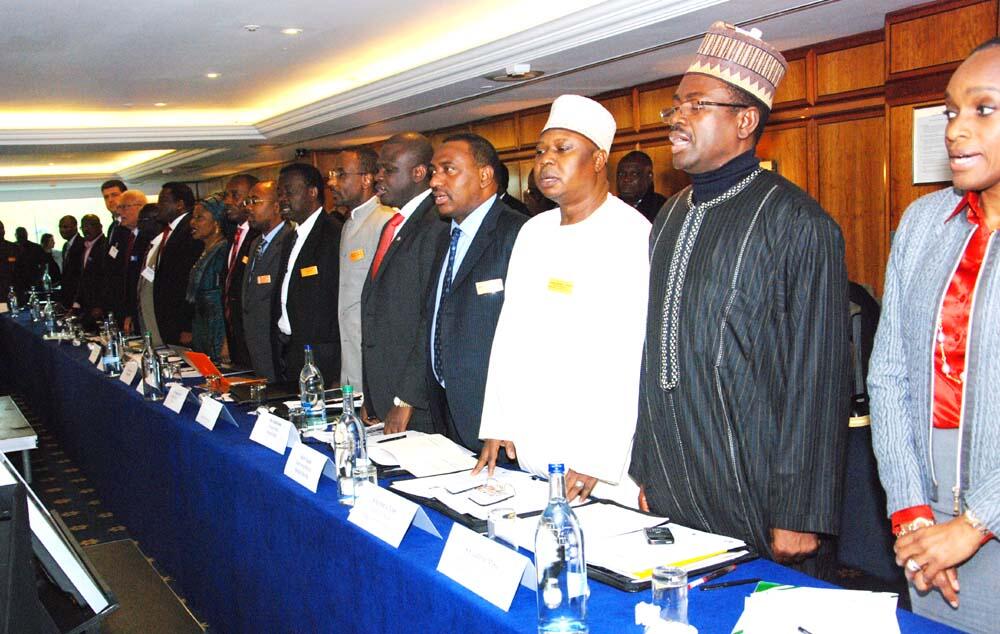
President Jonathan and Baroness Lynda Chalker earlier this morning at the HICC Meeting in London.

PRESIDENT JONATHAN RECOVERS FROM ILLNESS. PRESIDES OVER HIC MEETING IN LONDON


President Jonathan recovers from indisposition, he is presiding over the HIIC meeting in London right now. Will deliver his address shortly.

One more pic from HIIC meeting in London today.
Embedded image permalink

 Embedded image permalink


Embedded image permalink

Embedded image permalink
 right now. Will deliver his address shortly.

Embedded image permalink

Drivers of illegal tinted vehicles jail or N50,000 fine


Senate yesterday approved a legislation prescribing six months jail for anyone caught driving vehicles with tinted glass illegal.  The offender may pay a N50,000 fine in lieu of imprisonment. This is contained in the Bill for an Act to amend the Motor Vehicle (Prohibition of tinted glass) Act aimed at checking indiscriminate use of tinted glass.
The new legislation seeks essentially, “to amend the extant law in order to check indiscriminate use of tinted glass vehicles which beat security checks and carry out nefarious activities.”
The amendment was done following the spate of reactions from Nigerians on the recent announcement by the police of their intention to arrest and prosecute those driving vehicles with tinted glass .
Senate acknowledged that the police were not trying to introduce a new law, but was merely trying to enforce an already existing regulation  66 (2) of the National Traffic Regulations of 1997 and the Motor Vehicles (Prohibition of tinted glass) Act.
The bill, among other provisions, requests buyers of imported vehicles with tinted, shaded, coloured, darkened or treated glass  to change them to transparent ones within 14 days from the date of arrival in Nigeria or date of purchase.
In the alternative, it demands that buyers of such vehicles should request for a permit for the use of such tinted glass vehicles from the Office of the Inspector-General of Police, anywhere in the country, within 90 days of importing the vehicle.
It is also an offence for anyone to procure tinted glass on vehicles brought into the country with transparent glass, otherwise than in accordance of the provisions of the Act.
An individual who bought a tinted glass vehicle without changing it to transparent glass within 14 days, according to the bill, shall be liable to N2, 000 fine or be jailed for six months, or to both.
The bill also said that an individual who failed to seek registration for permit shall upon conviction be liable to a fine of N50, 000 or to a six-month imprisonment or both.Deputy Senate President, Ike Ekweremadu, who chaired the session, commended his colleagues for passing the bill, noting that tinted glass vehicles were constituting security challenges and that their continued usage could cause accidents.

Thursday, 21 November 2013

Dressed in Classy Jacket, Messi Gets the European Golden Shoe for Scoring Most Goals in a Season.

messi 2messi 1

The Argentina ace netted 46 times in La Liga as the Catalan giants reclaimed their title back from Real Madrid and he was presented with the trophy in Barcelona on Wednesday.
Messi, 26, also won the award following the 2009/10 season, when he scored 34 goals, and again after the 2011/12 campaign when he found the back of the net 50 times.
And a modest Messi said after being presented with the trophy by former Barca and Bulgaria forward Hristo Stoichkov, who was joint-winner in 1990: ‘I dedicate this award to my family, to the people who are there in the toughest times, and my team-mates.
‘I want to thank them because without them I wouldn’t have achieved anything. It’s a prize for the squad.’

Winners since 2006:
2006-07 Francesco Totti (AS Roma) 26 goals
2007-08 Cristiano Ronaldo (Manchester United) 31 goals
2008-09 Diego Forlan (Atletico Madrid) 32 goals
2009-10 Lionel Messi (Barcelona) 34 goals
2010-11 Cristiano Ronaldo (Real Madrid) 40 goals
2011-12 Lionel Messi (Barcelona) 50 goals
2012-13 Lionel Messi (Barcelona) 46 goals
Messi, who is currently sidelined for eight weeks with a hamstring injury, is the only player to win the trophy three times.
Regarding his injury and the possibility of being back in action by 2014, Messi said: ‘I’m better, improving little by little, I’m nearly without any pain and starting to do little things.
‘I haven’t put a return date, if everything goes well this will be the date (first game of next year) to return, but we’ll see how the recovery goes. It will happen when it has to happen.’

Messi enjoyed a typically successful start to the season with eight goals in 11 Primera Divison appearances before tearing his hamstring against Real Betis earlier this month.
However, his chances of winning a fourth Golden Shoe this season will have been badly hit by that injury, with Ronaldo already having notched 16 times in La Liga this term, with two hat-tricks in his last three matches.

SOURCE:www.stargist.com

Wednesday, 20 November 2013

Why John F. Kennedy's Legacy Endures 50 Years After His Assassination


 NOVEMBER 22, 1963
It began like any other day, but that day and its aftermath soon became hard-wired into the American psyche, black and white images still tainted with emotion in the minds of millions of Americans. For most of those old enough to remember, it holds a prominent place in their memories—the day JFK died—and the day when a bullet tore through the fabric of 20th Century America.
The news came suddenly, without warning. Gunshots in Dallas shattered American complacency about their national superiority. Nesting within a warren of cardboard boxes, a lone gunman with a mail-order gun had attacked the elected leader of the world’s foremost democracy. As Americans rushed to get the latest news and later mourned the president’s death, many immediately drew comparisons with Abraham Lincoln’s murder. However, few Americans recalled Presidents James Garfield and William McKinley, who also lost their lives to gunfire and many Americans in 1963 may have expected Kennedy’s death to be similarly lost in American memory.
However, it has been fifty years since that sunny autumn day in Dallas, and yet, many Americans still mourn and still exhibit fascination with the youngest man ever elected president. Neither Garfield nor McKinley could claim such a lasting hold on the American imagination.

In Africa, does democracy improve your health? – By Eleanor Whitehead and Zoe Flood

RwandaHealth
Back in the 1990s, the Nobel-prize winning economist Amartya Sen famously wrote that “no famine has ever taken place in a functioning democracy”, coining an argument has shaped thinking across countless sectors – and none more so than healthcare. If governments face open criticism and are under pressure to win elections, we assume, they are incentivised to improve the health of their populations. Dictators are not.
“Democracy is correlated with improved health and healthcare access… Democracies have lower infant mortality rates than non-democracies, and the same holds true for life expectancy and maternal mortality,” Karen Grépin, assistant professor of global health policy at New York University, wrote in a 2013 paper. “Dictatorship, on the other hand, depresses public health provision.”
She argues that democracies entrench longer-term reforms than their dictatorial counterparts – often involving universal healthcare or health insurance schemes. “The effects of democracy are more than a short-term initiative, such as an immunisation programme, which don’t always have lasting effects,” she said in a telephone interview. “Democracy can bring larger-scale reforms that create new things or radically transform institutions.”
But does that theory hold water in Africa?
Ghana, one of the continent’s deepest democracies, is doing well. According to Gallup data, 75 percent of its population consider its elections to be honest, compared to a median of 41 percent over 19 sub-Saharan countries. Correspondingly, it was also one of the first countries in Africa to enact universal health coverage laws.
In 2003, roughly a decade after entering a multi-party democratic system, the west African country hiked VAT by 2.5 percent to fund a national health insurance programme. Voters who had been overstretched by the previous ‘cash-and-carry’ system happily swallowed the tax increases, and the scheme was so popular that when the government unexpectedly changed in 2008, it survived the transition.
The country still has a way to go to attain universal coverage. According to the National Health Insurance Authority, by the end of 2010 34 percent of the Ghanaian population actively subscribed to the scheme. But the institutions are now in place, laying the foundations for the future.
Similar schemes are being rolled out in other democracies like South Africa. But this isn’t a simple equation. There are plenty more multi-party systems which have failed to enact meaningful reform – think of the pitiful performance in Kenya, where the government changed earlier this year – while some more autocratic regimes are performing well.
“Several of the countries that are seen as the big success stories in public health are not very democratic,” argued Peter Berman, a health economist at the Harvard School of Public Health.
Take Rwanda. Led by Paul-Kagame’s decidedly authoritarian Rwandan Patriotic Front, the country is considered “not free” by Freedom House. In the run up to 2010 presidential elections Human Rights Watch alleged political repression and intimidation of opposition party members against the leadership. Yet the government has a strong developmental track record. “Rwanda started out with somebody who is autocratic, but who genuinely wants to see these indicators change,” Grépin said.
Over the last decade, Rwanda has registered some of the world’s steepest healthcare improvements. After the 1994 genocide – when national health facilities were destroyed and disease was running rampant – life expectancy stood at 30 years. Today, citizens live to an average of almost double that. Deaths from HIV, tuberculosis and malaria have each dropped by roughly 80 percent over the last 10 years, while maternal and child mortality rates have fallen by around 60 percent.
Part of its success stems from the fact that its healthcare services reach rural citizens. The leadership hands responsibility to local government and authorities and holds them accountable for their efficiency; and almost 50,000 community health workers have been trained to deploy services to marginal populations.
Like Ghana, Rwanda runs a universal health insurance scheme, though it has fared better in its roll out. Upwards of 90 percent of the population is covered by the community-based Mutuelles de Santé programme, which has more than halved average annual out-of-pocket health spending. “By decreasing the impact of catastrophic expenditure for health care we increase the access,” explained Agnes Binagwaho, minister of health, from her Kigali office.
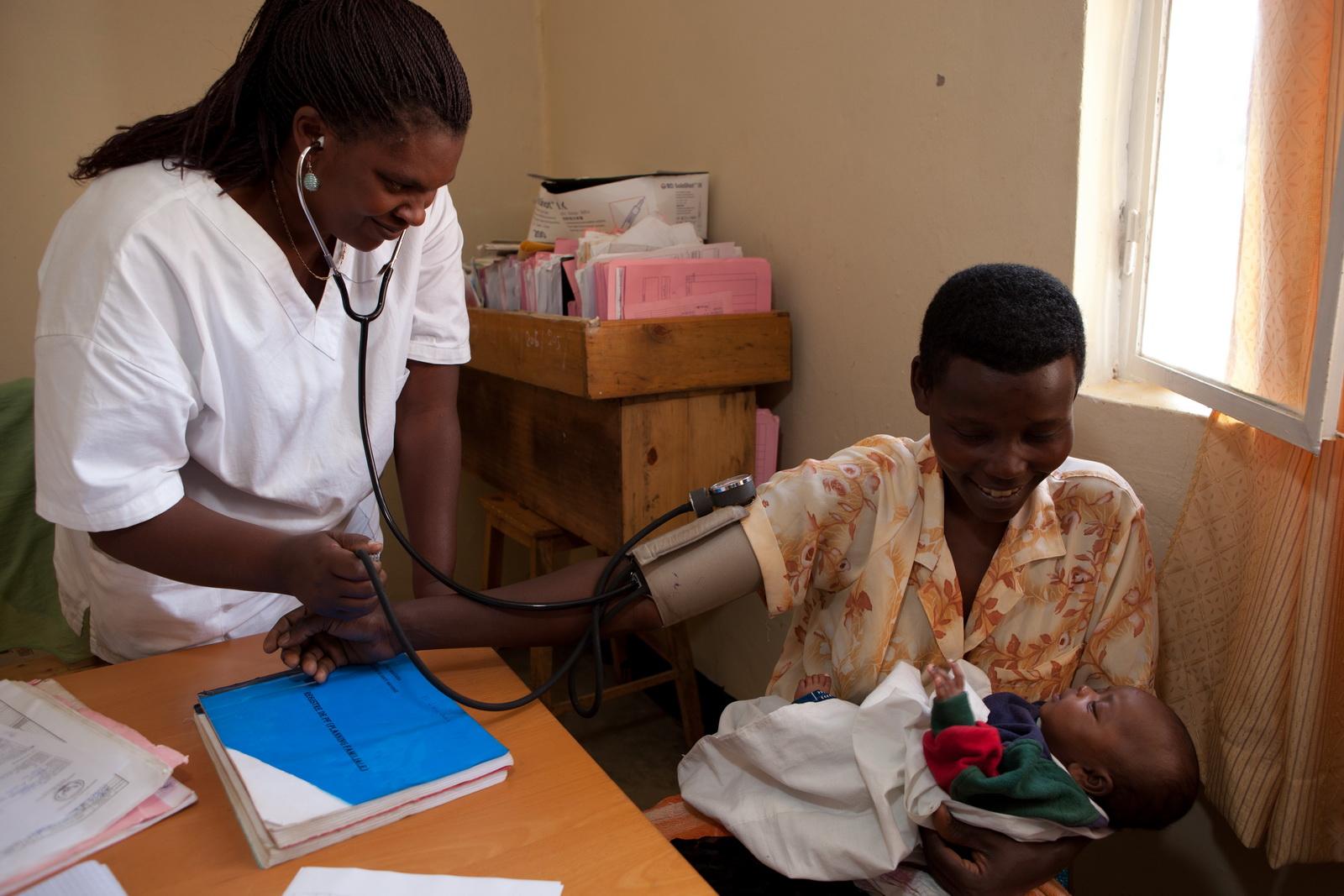
The benefits of that programme are clear to see at the bustling Kimironko Health Centre, which is a 20-minute drive from central Kigali and deals with most of the suburb’s non-life threatening medical complaints. As dozens of men, women and children queue to hand over their health cards, a young nurse named Francine Nyiramugisha explains that “Ever since the Mutuelles de Santé was introduced, there has been a huge difference. You pay 3,000 RwF ($4.50) per year and then you get treatment.”
In the reception, thirty-year-old Margaret Yamuragiye, a slender sociology student who has been diagnosed with malaria, waits patiently for her prescription. “Before I got my Mutuelles card I would fear that I could not go to the clinic because it would be too expensive. Today if I have simple cough or flu, I come to the doctor, I don’t wait to see if it gets worse,” she said.
Nearby in Ethiopia, another autocratic regime registered by Freedom House as “not free” is also clocking significant health improvements. Like Rwanda, leaders in Addis Ababa have little time for political opposition, but are registering impressive developmental gains. “They’re not very democratic but they have the power and authority to allocate resources towards population health needs,” Harvard’s Berman said.
There’s no universal coverage scheme in Ethiopia, but government has opted to focus on deploying basic healthcare services across hard-to-reach rural areas. Starting from a pitifully low base, it has spent a decade training a network of around 40,000 extension workers to bring care to rural communities. Over ten years, the nation registered a more than 25 percent decline in HIV prevalence, according to a 2012 progress report. Under-five mortality has declined to 101 deaths per 1,000 live births in 2009/10, from 167 in 2001/2. Infant mortality halved in the same period.
Those examples should be evidence enough that the relationship between democracy and improved healthcare isn’t a simple one. “There are autocratic governments that care about the people and there are autocratic governments who don’t. There are democracies where politicians respond to a broad public demand, and then there are democracies where the politicians respond to narrower interest groups,” Berman said.
“There is no simple equation between democracy and caring about public health.”

SOURCE:www.africanarguments.org

FALLOUT OF ANAMBRA GUBERNATORIAL ELECTIONS

 BREAKING NEWS: Fallout of Anambra Guber: I Did Not Rig Alone - Arrested INEC Official

A principal actor in the controversial Anambra governorship election of November 16 has reportedly made sterling revelations to his interrogators in Abuja.

Mr Okeke Chukwujekwu, the electoral officer in charge of Idemili North local government area of Anambra State, currently in police detention over his role in the electoral saga, was said to have told his police investigators that he was “being used and dumped”.

The chairman of the Independent National Electoral Commission (INEC), Professor Attahiru Jega, had, in the heat of the controversies generated by the flawed poll, admitted that the “electoral officer” in Idemili North “messed up” and that he would be handed over to the police for prosecution.
Chukwujekwu was moved to Abuja on Sunday, just as INEC said it was conducting a probe into the deliberate sabotage of the governorship election.

A top official involved in the election confided in LEADERSHIP yesterday that the arrested INEC official had made useful statements even as he was apprehensive that top directors of INEC might be “implicated”.
“The way this whole thing is going, it looks as if many heads will roll in INEC because the young man has made useful statements and if what he said is anything to rely upon, it then means that some big names in that commission might fall with him.

“At first, he was trying to rationalise his action in that local government area when he was verbally quizzed before the intervention of the police; but, after some time, especially at the point of his detention, he started to cooperate but the cooperation is loaded because he has mentioned some top officials of INEC, especially directors and a PDP chieftain, as those who ‘put him in trouble’.

Although the source declined to disclose the identities of those involved, he said “preliminary confessions” point to the fact that the bungled election in most LGAs of the state was “packaged by aggrieved politicians in connivance with top INEC officials both in Abuja and Awka” adding: “It was a well-funded package.”      
“All fingers point to some aggrieved politicians and it was a well-funded package that involved quite a lot of people; that is why the man is saying he has been used and dumped,” he said.     

Meanwhile, Jega has said all enquiries regarding arrests made in the bungled Anambra election should be referred to the police.
Jega’s chief press secretary, Kayode Idowu, told LEADERSHIP on the telephone that INEC would not comment on the arrested official who allegedly played a key role in the flawed poll.

“One, I cannot say anything on his matter because the police has taken over a larger chunk of the matter; only the police can say something on the role of the man arrested and how far they have gone with their investigation; so you have to contact the police.
“Again, it will be out of place for me to reel out what the commission intends to do. Mind you, INEC is also carrying out its administrative interrogation on his matter,” he said.  

 
INEC DOES NOT NEED COURT ORDER TO CANCEL TAINTED POLL -APC

The All Progressives Congress (APC) has accused INEC of being economical with the truth by saying only the courts can order the cancellation of last Saturday’s governorship election in Anambra in which about 1.3 million of the 1.7 million registered voters were unable to exercise their franchise.

In a statement issued in Lagos on Tuesday by its interim national publicity secretary, Alhaji Lai Mohammed, the party reminded INEC that it did not wait for a court order to cancel the National Assembly elections in 2011 when it was obvious that many voters across the country could not vote due to the late arrival or non-delivery of voting materials.

‘’In announcing the cancellation of the National Assembly election in 2011, INEC Chairman Attahiru Jega said, among others, that it was to ‘maintain the integrity of the elections and retain effective overall control of the process’,’’ it said.

APC said the situation in Anambra last Saturday was even more serious because, in addition to the fact that voting materials were either late or not delivered at all, most voters were disenfranchised by an INEC official who apparently tampered with the 2011 voters’ register for the state.

‘’Therefore, there are more compelling reasons now to cancel the Anambra governorship election than what led to the cancellation and rescheduling of the National Assembly election in 2011, unless of course INEC is still acting out the script handed to it for the ill-fated election,’’ the party said.


NGIGE: HOW POLL WAS RIGGED

INEC to police: probe Anambra electoral officers

Some lurid details of the fraud in last Saturday’s Anambra State governorship election were laid bare yesterday.
One of the major actors in the election, which was widely condemned as “flawed” and “shameful”, described the election as a “disaster”.

Dr. Chris Ngige, the All Progressives Congress (APC) candidate, said: “We have on tape a policeman thumb printing for APGA and INEC officials running away with election materials.”
Ngige was angry as he spoke at a press conference in Awka, the state capital. He said: “This INEC used students instead of members of the National Youth Service Corps (NYSC) to starve us of election materials. All the electoral officers were all compromised, like the one in Idemili North who deliberately acted on the orders of INEC and APGA.

“Students of Nnamdi Azikiwe University in Awka here were used as poll clerks just to find fault in APC and to favour their lecturer, Dr. Nkem Okeke, who ran as deputy to the APGA candidate in the election.

“Much more astonishing is that they wore NYSC uniforms because of the election and when they are taught how to perfect fraud, somebody will tell Nigerians that this country will be good. This is the disposition of the personnel that came to work in the election.”
Ngige urged INEC chairman Jega to call for the list of the Adhoc staff who worked during the election. “I do not want anybody to favour me or my party APC. Apart from the people from Calabar, every other person that worked during the election had affiliation with APGA,” Ngige alleged.

Ngige said APC members had computed that over 600,000 people were denied their voting rights, adding that the 210 units being allocated by INEC to them for the “so-called” supplementary election were not enough.
He added that the 16 local government areas being claimed by INEC as places where elections were cancelled was not true. APC, he said, knows that election did not take place in 20 local government areas.

Ngige said: “INEC on Sunday came up with what it called supplementary election. The votes allocated to APC during the so-called election on Sunday were fake because we did not participate.
“Our stand is clear. The election was fraught with intimidation, with thuggery, with disenfranchisement of our voters and total partisanship by the electoral body.”

He was disappointed in the system.

Said Ngige: “If it were a bazaar, it would have been a different thing and APC would have prepared for it, but we were told by INEC and the President of this country, Goodluck Jonathan, that it would be free, fair and credible. But it was not the case.
“Because they told us that they were ready for the election, that was why we conformed to it because we thought that those errors and mistakes had been corrected in the voter register, without knowing that it was a deceit.”

In his view, “the election was a systematic way to deal with the opposition parties in this state, especially APC, and the same thing happened in 2011 during my senatorial election.”
He blamed it all on Resident Electoral Commissioner (REC) Prof. Chukwuemeka Onukaogu, who accused of adopting “the same tricks he used in 2011 by adopting his APGA system to dislodge Ngige and APC.” “To my mind, the election was flawed ab-initio,” Ngige said.

He added: “I am a statesman in this country. I have never gone to INEC to seek for favour. For Jega who everybody regards as a man of honour and integrity to sit back and allow his office to be messed up by those without honour, I’m really amased.
“Jega is an activist like myself and I do not support injustice. I’m injured and pained that this kind of atrocity is happening in his time and I also have difficulty in absolving him. What has happened in Anambra State is a disaster.

“I am sad for my country. I have lost hope in the entire process. People’s hopes are being dashed. I’m not desperate to become a governor. I have been there before now. The people of the state have lost hope in INEC,” Ngige said.
A principal actor in the controversial Anambra governorship election of November 16 has reportedly made sterling revelations to his interrogators in Abuja.

Mr Okeke Chukwujekwu, the electoral officer in charge of Idemili North local government area of Anambra State, currently in police detention over his role in the electoral saga, was said to have told his police investigators that he was “being used and dumped”.

The chairman of the Independent National Electoral Commission (INEC), Professor Attahiru Jega, had, in the heat of the controversies generated by the flawed poll, admitted that the “electoral officer” in Idemili North “messed up” and that he would be handed over to the police for prosecution.
Chukwujekwu was moved to Abuja on Sunday, just as INEC said it was conducting a probe into the deliberate sabotage of the governorship election.

A top official involved in the election confided in LEADERSHIP yesterday that the arrested INEC official had made useful statements even as he was apprehensive that top directors of INEC might be “implicated”.
“The way this whole thing is going, it looks as if many heads will roll in INEC because the young man has made useful statements and if what he said is anything to rely upon, it then means that some big names in that commission might fall with him.

“At first, he was trying to rationalise his action in that local government area when he was verbally quizzed before the intervention of the police; but, after some time, especially at the point of his detention, he started to cooperate but the cooperation is loaded because he has mentioned some top officials of INEC, especially directors and a PDP chieftain, as those who ‘put him in trouble’.

Friday, 15 November 2013

Multiple Registrations: Court Orders Documents Pasted at Obiano's Residence


INEC-LOGO.jpg - INEC-LOGO.jpg       
A Federal High Court,  Thursday in Abuja, ordered the service of court documents (processes) on the governorship candidate of the All Progressives Grand Alliance (APGA) in tomorrow’s election, Chief Willie Obiano.
The documents are in respect of a suit marked: FHC/ABJ/CS/712/2013 - challenging Obiano's qualification for the election on the ground that he possessed two voter's cards, having allegedly engaged in multiple registrations.
Justice Ahmed Mohammed, after listening to the plaintiffs' lawyer, Ifeanyi Nrialike, moved an ex-parte motion, granted leave to the plaintiffs to effect substituted service of court processes on Obiano outside jurisdiction.
The judge also ordered the plaintiffs - Ugochukwu Ikegwuonu and Kenneth Moneke to, in effecting the substituted service, paste the processes on the entrance or any other conspicuous parts of his residence at 1 Chief Willie Obiano Street, Aguleri Otuocha, Anambra State.
Sued with Obiano is the Independent National Electoral Commission (INEC).
The plaintiffs had contended that the voter's card Obiano tendered before his party which allowed him to participate in the party's screening exercise was not the same as the one he submitted to INEC and therefore raised three questions for the court's determination, while seeking five reliefs, including an order disqualifying Obiano from contesting the election.
They also sought an order of mandatory injunction compelling INEC to strike out Obiano's name from its record as a candidate in the election.

Tuesday, 12 November 2013

The Fallacy of Two Sovereigns-FRED ONYEOZIRI


One argument which incumbent governments and their advisers employ against the demand for a sovereign national conference is that two sovereigns cannot coexist in one system. What they imply here is that the incumbent government is a sovereign and convoking a sovereign national conference amounts to setting up another sovereign body. This will make two sovereigns, and we cannot have two sovereigns in the same system.

But is the present/incumbent government a sovereign one? The answer is of course “NO”. Any argument that suggests the contrary is arrogant, self –serving and misleading.
In 1999, the Nigerian People, who remain always the authentic sovereign in this land, gave the Obasanjo government a restricted mandate to govern this country. That mandate was restricted in three senses. One, the mandate to govern was restricted to last for four years.
Any extension beyond that four year period required a fresh mandate. Two, while the mandate lasted, the government was bound by the constitution which is the fundamental law of the land as distinct from the general ordinary laws which the government and its national Assembly are allowed to make. Action outside this constitution or fundamental law is a violation of the mandate. Three, the Obasanjo government was supposed to operate on the basis of the manifesto which the ruling party presented to the Nigerian people during the electioneering campaign. Usually, the manifesto of a political party forms part of the party’s mandate when in power. Unfortunately, for us in this country, parties may even get elected without any articulated manifesto.

Is Clara Chime a victim of love? By Sam Omatseye

Is Clara Chime a victim of love? By Sam Omatseye


The news came to everyone rather surreptitiously. The governor of Enugu State, Sullivan Chime, reportedly detained the first lady. The image was unsavoury: a governor, in his hectoring majesty, ordering the security aides to corral Clara. The image takes on more dramatic hue as we imagine the screaming first lady pinned down, her hands wrapped around her back, forced either to sit down or lie down, her clothes out of joint, before the doors are locked against her.
This contradicts the temperament and powers of first ladies. First ladies often pin down their men, extract special favours and sometimes ride more glorious convoys than their husbands. Quite often, aides fear them more than their husbands. A person can be fired but a soft word from the first lady can redeem the job. Even when the governor confesses a special softness for an aide, the first lady who shares a contrary standpoint could reverse the affection. She could make life so difficult for that aide and the governor that her triumph is a foregone conclusion.
She is the prop, whisper and, sometimes, bully behind the throne, the pillow-talk queen. That made it quite difficult for many to digest the narrative of a humiliated power dame. But some who had followed the story of Governor Chime had observed some traits counterintuitive to this picture of governor-first lady relationship.
We remember Chime ushering in the New Year with stories of his failure to let anyone know if he was sick and why he would not convey, in simple language, why he could not communicate with the people of the state. The people who voted him into power knew nothing about the person they voted for, whether he was alive or dead. Consequently, the rumour mills buzzed, and depending on who you asked, they said Governor Chime suffered from one illness or another. Imagination overthrew reality.
He never loved the media, and saw any reporter or editor as a predator in his holy of holies. In his recent press briefing, he said he did not hate the media but he had issues with them because when he was ill, some newspapers reported his death. No excuse for newspapers that soared on fiction. It was irresponsible, especially on a delicate matter like death. But Governor Chime fertilised errant imagination by not providing facts as the first information officer of the state. He never saw his own shortcomings. He only saw others’.
Chime only recently knocked down the building of the Mountain of Fire and Miracles Ministries in his state against court orders. Is that not impunity? Does the law matter to the man who defies a court order? Again, he tried to resolve issues he had with university lecturers by unleashing dogs after them.
Against these news reports, some members of the public had judged the governor as Clara’s predator. But then, he organised a press briefing, and the governor said that his wife was afflicted by mental illness, and he had to restrain her to keep her from ridicule. She was present at the occasion, as well as her present doctor, Aham Agumoh, as well as Clara’s brother.
Governor Chime tried to paint himself as the husband and protector. And not a few people were impressed. But humans rights lawyer Femi Falana (SAN) has been pushing a different narrative. He said the woman had hired him as her attorney. But the woman had said that she did not hire Falana in the open interview. Yet, a letter leaked to the media that she had contacted a certain chief whom she wanted to contact Falana on her behalf. She admitted in the interview that her letter leaked. That corroborates Falana’s position that she wanted his help. The reporters did not ask Clara Chime why she wrote the letter and whether she insisted on the contents. I contacted Falana and he said Clara’s mother told him to help free her daughter from the grasp of the governor. He also said the woman asked him if she sounded like somebody who was mentally disturbed.
Two important developments bear investigation. One, why did she ask for a different doctor, and why did she have to scream for the matter to be brought to the fore? The same doctor appeared in the press briefing. Was he supposed to appear there, according to his professional oath, even if the governor wanted to clear his image as a wife bully? Yet, she accepted in the open press briefing that Dr. Agumoh was her doctor, the same doctor she wanted replaced.
The other question is, did Clara act under duress in the press briefing? What did they discuss with her when they took her away from the media for several minutes?
What are the details of the doctor’s treatment that have riled even members of her family? Tony Igwe, Clara’s brother, may not have represented other members of the family given the fact that the members object to the present treatment of their daughter. This was clear in the intervention of the National Human Rights Commission. Both Chime’s and Clara’s families did not agree on how her matter was being handled. Could it be that her so-called mental condition is exaggerated? She described her state as nervous breakdown.
If her situation is not as bad, then is Chime along with Dr. Agumoh not acting like Dr. Bero in Soyinka’s play, Madness and Specialists, where the specialist becomes in a sense guilty of what the patient allegedly suffers? German philosopher Friedrich Nietzsche wrote: “There is always some madness in love. There is also always some reason in madness.” Is it a case of too much love, which itself can injure, or violated love? Shakespeare calls it “cold fire,” “wolvish-ravening lamb,” or “fiend angelical.” Is Clara a victim of love?
It is always a delicate matter in psychiatry not to over-treat a case or it may itself pass as madness. That was the case in Achebe’s short story, The Madman, when a sane man of high nobility, with no clothes on, pursues a madman, who stole the sane man’s clothes, into the market place. We cannot just forget that the Soviet Union established asylums for dissidents.
Even the NHRC contradicted itself when it said it was established that she suffered from depression and hallucination. In the five-hour session it had with her, it did not see any such evidence. It is a human rights body, what was its business making judgment about her mental condition, especially when it knew the two families did not agree on the treatment? If they did not agree on the treatment, it means they did not agree on the diagnosis.
In one breath, the NHRC agreed with a diagnosis and, in another, set up a committee to examine her true state of health. The NHRC said Clara had access to her son and keys to the apartments, but it had no knowledge whether or not that is a recent development prompted by her outcry. The NHRC’s retraction was an afterthought. It has compromised its integrity as a body.
This has been happening for all of four months, and Governor Chime’s desperate press conference was not actuated by any chivalry but a necessity to save his name. It is not so much that he is interested in transparency.
When he was flown out of the country, he did not believe in transparency then. He owes Enugu State citizens as well as Nigerians explanations for keeping the matter under wraps while he was abroad. His illness was more important to Nigerians and Enugu State citizens than that of his wife. The health of a whole state hung on him as the carrier of their mandate. No one voted in Clara Chime.
It was wrong, and even wrong-headed to present himself as a latter-day convert to the doctrine of transparency. May be he is not a convert. He was just pushed to the corner by the cries of the media and the fulminations of Falana. So he acted not out of conscience but necessity. So, he is not Clara’s hero.

Monday, 11 November 2013

PDP Suspends Oyinlola

3010F04.Olagunsoye-Oyinlola.jpg - 3010F04.Olagunsoye-Oyinlola.jpg
There seems to be no end in sight to the crisis rocking the Peoples Democratic Party (PDP) as its National Working Committee (NWC) Monday wielded the big stick yesterday, when it suspended its former acting National Chairman, Alhaji Abubakar Kawu Baraje; the party’s National Secretary, Prince Olagunsoye Oyinlola; its former Deputy National Chairman, Dr. Sam Sam Jaja; and National Vice Chairman, Northwest of the breakaway faction of the PDP, Ambassador Ibrahim Kazuare.
Ostensibly, the decision was meant to forestall any move by the New PDP to enforce the reinstatement of Oyinlola as the party’s scribe following a Court of Appeal judgment Monday reversing his removal by a lower court.
Also, PDP directed that the four suspended party members should face the Umaru Dikko-led National Disciplinary Committee of the party, while maintaining that the party was yet to get the Court of Appeal order that reinstated Oyinlola as the national secretary.
But Oyinlola, in a swift reaction said: “This is part of the impunity we are protesting against. None of us has been queried or requested to give explanations for any alleged offence.
“And if they are reacting to the issue of the New PDP, why did they decide to leave out the serving state governors, senators and members of the House of Representatives who have been very vocal? It’s all an attempt to circumvent the ruling of the Court of Appeal.
“Certainly, the last has not been heard on this matter and I am sure that the truth will prevail over falsehood.”

Should Boko Haram be labeled a Foreign Terrorist Organization? – By Christopher O’Connor

Shekau

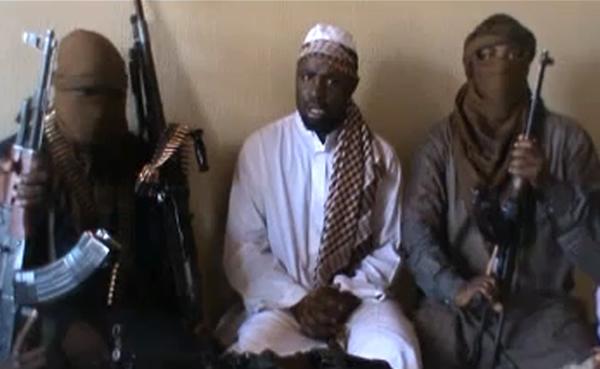
On November 13, two Subcommittees in the US House of Representatives – Africa, Global Health, Global Human Rights, and International Organizations and the Subcommittee on Terrorism, Nonproliferation, and Trade – will hold a joint hearing to discuss the threat posed by Jama’atu Ahlis Sunna Lidda’awati wal-Jihad, better known as Boko Haram. In the wake of persistent and heinous attacks on civilians perpetrated by its militants, most recently an attack on a wedding party claiming 30 lives, Congress looks poised to propose legislation compelling the US State Department to label Boko Haram as a Foreign Terrorist Organization (FTO). When debating this legislation Congress should be asking not if Boko Haram is a terrorist organization, but does this legislation contribute to promoting human rights and security in North-East Nigeria?
In June 2012 the US State Department labeled Boko Haram leaders, including Abubakar Shekau, Abubakar Adam Kambar, and Khalid al-Barnawi, as Specially Designated Global Terrorists, but it has so far resisted pressure to add the organization to the FTO list. Many Nigeria watchers in Washington, including former Ambassador John Campbell, have backed the US State Department’s approach, arguing that “it [Boko Haram] does not pose a threat to the American homeland” at present, and that “Americans could become a Boko Haram target” if the US government is perceived as  closely aligning with Abuja’s war against the group.
Despite these concerns, many in Congress are likely to argue that the United States cannot tolerate a radical insurgency that burns down schools, shoots students, and decapitates motorists. Designating a group as an FTO introduces new tools designed to combat the organization, including financial restrictions, and disincentivises organizations or individuals from associating with it. The potential impact proposed legislation will have in weakening Boko Haram is, however, unclear. Those individuals and organizations likely to be associating with, and/or funding, Boko Haram at this time are unlikely to be swayed by US disapproval. Several of Boko Haram’s potential associates are already proscribed by the US government.

Friday, 8 November 2013

Lack of Secrecy tears Reps apart

N255m scam: Panel report leakage tears Reps apart 
The leakage of the House of Representatives report on the purchase of N255m BMW bulletproof cars to the media tore members of the investigation panel apart on Thursday.
The Nigerian Civil Aviation Authority bought the controversial cars allegedly for the use of the Minister of Aviation, Ms Stella Oduah.
She appeared before the panel to deny that the cars were purchased for her.
Some newspapers, including The PUNCH, had scooped snippets of the report on Wednesday ahead of the report presentation before the House on Thursday (yesterday).
Investigations showed that the Chairman of the House Committee on Aviation, which conducted the investigation, Mrs. Nkiruka Onyejeocha, was enraged that the media had foreknowledge of the content of the report.
Some key members of the committee also expressed disgust over the development, saying that it exposed the “lack of trust” among the members.
“The chairman has been raking all day; she has been restless.
“She has asked almost all members of the committee how the media got what they reported today (Thursday).
“The matter caused disquiet among the members; they are seriously suspecting one another.
“More so, she insists that the media published a distorted version”, a source close to the committee, confided in The PUNCH on Thursday.
The PUNCH learnt that some members, who suspected that the final report might be doctored, had volunteered pieces of information to the media.
Efforts to get the report proved abortive on Thursday, as Onyejeocha guarded it jealously till she laid the document.
She also declined to comment on the content of the recommendation as she consistently expressed bitterness over the snippets.
When The PUNCH traced her to her office after laying the report, Onyejeocha was further enraged.
She claimed to have printed only one copy, which was submitted to the House on Thursday.
She shouted, “Up till this morning, we were still writing this report; I don’t know where you newspaper people got what you reported from.”
“It is just that this investigation is sensitive; I would have disowned the entire report and call for a repeat of the investigation.”

Thursday, 7 November 2013

N255m car scandal: Reps’ panel indicts Oduah, NCAA

Minister of Aviation, Ms. Stella Oduah 
There were indications on Wednesday that the House of Representatives Committee on Aviation had established some infractions against the Minister of Aviation, Ms Stella Oduah, and the Nigerian Civil Aviation Authority.
The committee is investigating the controversial purchase of two bulletproof BMW cars by the Nigerian Civil Aviation Authority allegedly for Oduah at a whopping N255m.
However, she testified before the committee, which is chaired by Mrs. Nkiruka Onyejeocha, and denied that the cars were bought for her use.
The panel  ended  its public hearing on the transaction on Monday.
Oduah was expected to appear before   the Senate    on Wednesday but could  not because of the Federal Executive Council meeting.
Findings by The PUNCH indicated that  the Onyejeocha –led committee  might  lay its  report before the House on Thursday (today).
It was gathered that after deliberating on records before them, members of the panel had established some infractions against the minister and the NCAA.
Sources close to the committee confided in The PUNCH that “at least four issues are no longer disputable.”
According to findings, one of the issues is “extra-budgetary spending”, while the second is “approval beyond ministerial limit.”
It was learnt that the committee also established a case of “violation of public procurement procedures.”
Similarly, the panel confirmed that “indeed, N255m was spent to buy two bulletproof BMW cars and the use of waivers meant for EKO Games to import the cars.”
One of the sources told one of our correspond

Wednesday, 6 November 2013

Ndigbo: Towards Selfless Leadership

The scenario in Enugu and Abia States had all the trappings of the unbelievable.  That is when you think of the usual nature and character of political gatherings in the South-east. The respective halls set aside for the event in these two states were filled to the brim. Besides friendly banter and last minute comparing of notes by representatives of various organisations, there was calm. There was also a conviviality that could best be described as uncommon when groups come together to present their respective positions on the same issue. Although most of the people came early, chief among them some of the leaders of the South-east zone, the air of restlessness and irritation that often accompanied any event that came close to starting late was absent.
On both occasions, in Abia and Enugu States, the people were assembled to meet with the National Dialogue Committee set up by President Goodluck Jonathan. The committee’s mission in the South-east was to ascertain how the people wanted the talk shop to be organised. As soon as the work plan of the national committee was made public, painstaking consultations began across various divides. In the end, major stakeholders and power centres in the South-east resolved that the zone should speak with one voice on the simple matter of whether Ndigbo wanted the conference, how it should be organised, who should attend and the legal framework for such a venture.
That’s how it came about that the opinions and positions of the various organisations were subsumed under an umbrella submission. That is also how it came about that it was Ohaneze that rose to speak on behalf of the South-east. Most of the other high profile organisations only sent credible representatives, with the brief that they should only get up to announce that the position of Ohaneze was indeed the agreed position on the issues under reference. The surprise of many people was palpable, even though they were part of the consensus decision. While they found themselves excited about everything, they were dazed to discover that the series of meetings and reconciliation of positions which had been going on for nearly two weeks before the event yielded something after all. It was during these earlier consultations that issues were trashed and positions fine-tuned.
The logic of the new thinking about consolidation is that, notwithstanding its challenges, Ohaneze Ndigbo is generally regarded as the apex pan Igbo organisation. Besides this body, there are so many others, such that counting them may present enough work to keep the National Population Commission busy for weeks. But it can be helped to do better, not killed. Thus when some very prominent persons from the South-east floated the South East Peoples Development Association (SEPDA), there were concerns about further political balkanisation of the zone and the consequent undermining of group cohesion. The fears were totally unfounded, as the goals of SEPDA were beyond all that.
The objective of the main drivers is to offer direction, draw and deploy capacity, engage stakeholders and potential partners in a quiet resolve to offer selfless leadership to a region traumatised by reckless power seeking by persons of questionable credibility and controversial antecedents. Working quietly and unobtrusively, SEPDA has repaired many political bridges, applied soothing salves to frayed political nerves and appears poised to insists that good should be done without the ‘do gooder’ prancing all over the place or claiming accolades for it. That is why the association also took up the matter of ensuring that the people of the South-east were not just involved in the proposed national dialogue, but that they actually understood what the issues were at any moment and made informed decisions and contributions.
In this regard, one of the challenges that presented itself when the dialogue was announced was the possibility of Ndigbo coming out to sing discordant tunes, as usual. But SEPDA leadership reasoned that the dignity of a family in the Village Square is best demonstrated when the family sends just one person to speak on its behalf before the community; with any subsequent speakers elaborating on one or two minor details. It was also the thinking that no kindred gains respect by ridiculing its elders and that a family that sends out several people to represent it in the Village Square has announced the absence of wise elders within its fold. It is folly for a family to bring too many voices into a matter that will not be decided by votes and it is proof that the family cannot manage its human resources in a sane manner.
Ndigbo says that no one hails a drunken and staggering man as “Ide ji uno” (the pillar that holds the fort, or house). It is also common Igbo wisdom that you do not give the title of “onu na ekwuru oha” (spokesman of the people) to the dumb, lest your people be struck with constraints of the vocal cords. Thus SEPDA summomned one and all to think like a people with a purpose and a sense of history.
Ndigbo Lagos, Aka Ikenga and several other high profile organisations representing strong Igbo positions, populations and perspectives across several fronts conducted themselves with uncommon dignity and propriety.
They responded by forwarding their considered positions for integration into a common South-east position. With this head start, any group with the submissions could have decided to posture as the ‘new face’ of Ndigbo in national affairs. With so many active politicians, former governors, retired Generals and sundry powerful active politicians in the SEPDA fold, for instance, it would have been a simple matter of announcing that SEPDA had ‘retired’ Ohaneze. But that did not happen. Instead the drivers of SEPDA told Ohaneze what it was doing, put the positions together and met with Ohaneze to arrive at a final, common position.
In the end, it was possible to draw capacity and leverage a common effort, rather than set and run an alternative platform – with the attendant discord and bad blood. What this has brought out is that the possibility of peace and cohesion is strong in the South-east. But it must be peace and cohesion that is predicated on a new realisation. That realisation is that a people can make great progress if they learn that not everyone must be on the front row in every event.
The additional realisation is that certain words sound better and more credible in the mouth of someone who may actually not have crafted it. A man is not diminished because he is working quietly in the background, just as there is no greater danger to a people than when they cannot manage the potential or actual excesses within their own fold. SEPDA has started on a commendable and firm footing and should continue on this trajectory.
One thing that must change, though, is the attitude so robustly displayed by the Enugu State Governor Sullivan Chime. My admiration for Chime for the complete transformation of the urban outlook of Enugu is undimmed. While I prefer to believe that some truly phenomenal matters descended on him during the period of the visit of the dialogue committee to Enugu, I must put it on record that he could have given a much better account of himself. Everyone was appalled.
The Abia State governor and his chief-of-staff were fully prepared and ready for the event, as the state government mobilised everyone for the occasion.
But it was plain hell getting the government of Enugu State to give some kind of proof that Governor Chime was at least the owner of his own phone. He did not take calls or respond to text messages from representatives of the national dialogue committee for over a week before the event. While responses to calls and enquiries from Abia were always prompt, Enugu woke up less than three days to the event through the Secretary to State Government (SSG); a diligent and decent man who appeared hamstrung.
Abia State made it a national event. Enugu State tried very hard to make it a non-event, but failed. A few hours before the commencement of proceedings, representatives of the national committee were still desperately trying to get the venue cleaned and ready in Enugu. The chairs were also yet to be procured and taken to the venue. No one in government could do anything because the governor was said not to have given any clear instructions on some very basic things. Then there was the matter of the totally abhorrent accommodation that was nearly inflicted on the National Dialogue Committee, but which was rejected for fear of snake bites!
Whatever may have happened during the time of the visit, our hard working Chime knows that a host has very fundamental duties, to say nothing of when his guests are from distant lands. The government of Enugu State disgraced the good people of the state and should strive not to do so again. The unfortunate thing, however, is that you cannot call back a guest who has left with a bad impression in order to treat him well.
As for Abia State, one thing was clear from its handling of the events. The government knows how to mobilise its people to turn out for an event. Where it should place some greater emphasis when the real discussion begins is on the submissions of the various interest groups. Consolidation is always a way forward, especially when it is given in any discursive situation.
The South East Economic Summit
What needs to happen to make the South-east attract greater trade and investment? This was the central theme and question at the just concluded South East Economic Summit. Finding the right cocktail of policies and incentives to leverage the economy of the region is the only way to re-invent the energies and possibilities of the South-east region in the 21st century. But that is a matter we must discuss another day.

source-thisday

Tuesday, 5 November 2013

Column: Why Scandinavian women make the rest of the world jealous -Lynn Parramore


Icelanders are among the happiest and healthiest people on Earth. They publish more books per capita than any other country, and they have more artists. They boast the most prevalent belief in evolution — and elves, too. Iceland is the world's most peaceful nation (the cops don't even carry guns), and the best place for kids. Oh, and they've got a lesbian head of state, the world's first. Granted, the national dish is putrefied shark meat, but you can't have everything.
Iceland is also the best place to have a uterus, according to the folks at the World Economic Forum. The Global Gender Gap Report ranks countries based on where women have the most equal access to education and healthcare, and where they can participate most fully in the country's political and economic life.
According to the 2013 report, Icelandic women pretty much have it all. Their sisters in Finland, Norway, and Sweden have it pretty good, too: those countries came in second, third and fourth, respectively. Denmark is not far behind at number seven.
The U.S. comes in at a dismal 23rd, which is a notch down from last year. At least we're not Yemen, which is dead last out of 136 countries.
So how did a string of countries settled by Vikings become leaders in gender enlightenment? Bloodthirsty raiding parties don't exactly sound like models of egalitarianism, and the early days weren't pretty. Medieval Icelandic law prohibited women from bearing arms or even having short hair. Viking women could not be chiefs or judges, and they had to remain silent in assemblies. On the flip side, they could request a divorce and inherit property. But that's not quite a blueprint for the world's premier egalitarian society.
The change came with literacy, for one thing. Today almost everybody in Scandinavia can read, a legacy of the Reformation and early Christian missionaries, who were interested in teaching all citizens to read the Bible. Following a long period of turmoil, Nordic states also turned to literacy as a stabilizing force in the late 18th century. By 1842, Sweden had made education compulsory for both boys and girls.

Sunday, 3 November 2013

UK GOVERNMENT SOFT PEDDALS ON NIGERIANS

Great news ! The UK government has announced plans to cancel the £3,000 cash bond that visitors from 'high risk' countries, including Nigeria, were to put up to enter Britain. Below is the latest update from The Sunday Times UK..
The government is to abandon a controversial plan to impose £3,000 immigration bonds on visitors from “high-risk” countries in Africa and Asia after Nick Clegg threatened to block the policy.
The move will be seen by Labour as a humiliating U-turn for Theresa May, the home secretary. It came after David Cameron backed off from a full-scale confrontation with the Liberal Democrat leader, who was blocking the scheme’s progress through cabinet.
A pilot project to target visitors from seven countries — including India, Pakistan and Nigeria — who would have had to pay a cash guarantee or deposit to deter immigration abuse was to have been introduced this month.
The plan was to make visitors forfeit £3,000 if they failed to return home by the time their visas had expired. But in an announcement this weekend the government said it was canceling the plans

Panic in Osun Community over discovery of shrine

Panic in Osun Community over discovery of shrine


Residents of Mosarajo village in Atakumosa West Local Government Area Osun state now live in panic even as many have fled the village following the discovery of an awful shrine in the village by security operatives.
Police and other security operatives including the Nigeria Security and Civil Defence Corps (NSCDC) had on Friday discovered a shrine where human parts were allegdly being sold in the village located close to Ile-Ife.
Already, four persons have been arrested by the Police for allegedly operating the shrine, which covers about an acre of land in the village.
Residents of the village now live in fear and panic even as it was gathered that many of them fled overnight for fear of being arrested by the Police.
Sunday Sun reliably gathered that a good number of people from all parts of the country patronize the shrine and many of them had been duped by those operating the shrine.
The shrine, which is a replica of the dreaded Okija shrine, was discovered by security operatives following a tip-off by some residents of the village.
The owner of the shrine who was simply identified as Aliyu (a.k.a Aburagbaja) a native of Inisa in Odo-Otin Local Government Area of the state was said to be using the shrine to defraud unsuspecting people.

Friday, 1 November 2013

Anambra State on the march again:Supreme Court Stops PDP from Kicking off Campaign

130913N.Bamanga-Tukur.jpg - 130913N.Bamanga-Tukur.jpg
Bamanga Tukur
The Supreme Court Thursday barred the Peoples Democratic Party (PDP) from carrying out its planned campaign kick-off already slated for Saturday.
This followed an undertaking extracted by the court from Mr. Paul Erokoro and Mr. Garba Pwul, representing the party, its National Chairman, Alhaji Bamanga Tukur and Mr. Tony Nwoye respectively.
The Vice-President, Alhaji Namadi Sambo, was billed to lead the party's campaign in the state.
Also yesterday, the court stopped Senator Andy Ubah from joining in the appeal seeking to decide who should be the authentic candidate of the PDP in Anambra State. In a ruling delivered at about 6:30 yesterday, the Supreme Court refused Ubah's application to be joined in the appeal filed by Ukachukwu challenging the declaration that Nwoye was the candidate.
The Federal High Court sitting in Port Harcourt had earlier declared Nicholas Ukachukwu as the candidate of the party but this was reversed by the Court of Appeal, Port Harcourt division wherein, Tony Nwoye was declared as the authentic candidate.
Not satisfied, Ukachukwu through his counsel, Joseph Daudu, SAN approached the apex court challenging the judgment of the lower court.
When the matter came up yesterday, Daudu noted that the court should order a stay of execution of the Court of Appeal decision stating that the party was planning to handover the flag to Nwoye on Saturday.
Counsel to PDP and Nwoye, Paul Erokoro SAN and Garba Pwul, SAN respectively gave an undertaken that none of their clients would do anything to tamper with the subject matter so as not to over reach the court.
Ubah had earlier through his counsel, Lateef Fagbemi, SAN brought an application seeking for leave to be joined as an interested party in the appeal between Nwoye and Ukachukwu which will be coming up before the court on Monday. However, joined as respondents are the PDP, Independent National Electoral Commission (INEC), Nwoye and Ukachukwu.
Fagbemi hinged his application on the grounds that it was the recognised state executive of the party that conducted the primary that brought Ubah.
He further submitted that the Federal High Court had earlier given an order that the primary election could only be conducted by the Ejike Ogbeigbo led executive which the INEC complied with.
He submitted that the lower court turned down his client's application to be joined as a party before it hence the need to seek for a joinder before the final decision was reached by the apex court.
Opposing the application, counsel to the PDP, Erokoro submitted that the application was an abuse of court process as the applicant had earlier filed an appeal which had been entered and pending before the court.
He argued that contrary to the submission of the applicant, the national executive of the party was the only authority that had the power to conduct congress where party candidate for a gubernatorial election would emerge and prayed the court to dismiss the application.
Counsel to Nwoye, Pul opposed the application stating that the order which the applicant was relying on was given after the primary election had been conducted, submitting that the order could not have a retrospect effect.
He argued that the application brought by the applicant if granted would delay and complicate the existing appeal which the court had fixed Monday for hearing. He therefore urged the court to dismiss the application.
While also opposing the application, counsel to Ukachukwu, J.B Daudu SAN argued that it was incompetent because the applicant had failed to file a notice of appeal alongside with application seeking leave to be joined.
He argued that the application was an abuse of court process as the applicant had already filed an appeal which was pending before the court and prayed the court to dismiss the application.
After listening to the parties, the court rose for about one hour to write its ruling. In its ruling, the court held that the judgment of the court of appeal relied on by Ubah was not certified and therefore could not be admitted by the court.
It further held that there was a pending appeal filed by the applicant before the court and this instant one had constituted an abuse of court process. The court, as a result, dismissed the application as being unmeritorious.
Meanwhile, the PDP yesterday inaugurated its National Campaign Committee, with an advice to the voters to disregard the candidate and vote for the party. Sambo said that though the party is commencing the campaign rather late, but warned that one week was not late to ensure that PDP wins the governorship election.
“I want to remind you that we have a strong battle and we will win this battle by the Grace of God,” said Sambo who appealed to PDP members that have left the party to come back and ensure victory for the party.
Speaking before inaugurating the campaign committee, Tukur charged the electorate in Anambra State to disregard the candidate but the party as there is no independent candidate in elections in Nigeria.
“It is not the messenger but the party. There is no independent candidate in elections,” he said while charging the campaign committee led by the Sambo to ensure that PDP comes victorious at the election.

Photo: Meet The Ethiopian Men Who Compete To Be The Fattest By Drinking Cow Blood & Milk

For Ethiopia's Bodi or Me'en people, bigger is always better.
According to DailyMail,  the tribe, which lives in a remote corner of Ethiopia's Omo Valley, is home to an unusual ritual which sees young men gorge on cow's blood and milk in a bid to be crowned the fattest man.

Six months after starting the regime, the men emerge to show off their newly engorged physiques and for a winner to be chosen.


The champion fat man is then feted as a hero for the rest of his life.

Bizarre it may sound, See the pictures below


what do you think of these pictures?