If there were such a thing, it would probably be rule No. 1 in the teaching manual for instructors of aspiring suicide bombers: Don’t give lessons with live explosives.
In what represented a cautionary tale for terrorist teachers, and a cause of dark humor for ordinary Iraqis, a commander at a secluded terrorist training camp north of Baghdad unwittingly used a belt packed with explosives while conducting a demonstration early Monday for a group of militants, killing himself and 21 other members of the Islamic State of Iraq and Syria, army and police officials said.
Iraqi citizens have long been accustomed to daily attacks on public markets, mosques, funerals and even children’s soccer games, so they saw the story of the fumbling militants as a dark — and delicious — kind of poetic justice, especially coming amid a protracted surge of violence led by the terrorist group, including a rise in suicide bombings.
Just last week a suicide bomber struck a popular falafel shop near the Ministry of Foreign Affairs here, killing several people. On Monday evening Raad Hashim, working the counter at a liquor store near the site of the attack, burst out laughing when he heard the news.
“This is so funny,” Mr. Hashim said. “It shows how stupid they are, those dogs and sons of dogs.”
More seriously, he said, “it also gives me pain, as I remember all the innocent people that were killed here.”
“This is God showing justice,” Mr. Hashim continued. “This is God sending a message to the bad people and the criminals in the world, to tell them to stop the injustice and to bring peace. Evil will not win in the end. It’s always life that wins over death.”
Another resident of the area, who lives near the ministry building that was targeted last week, said: “I heard this today when my friend rang me in the afternoon to tell me about it. He was so happy as if he was getting married.
“Which made me happy as well,” the resident said. “I hope that their graves burn and all the rest of them burn as well. I was not happy with the number killed, though: I wanted more of them to die, as I remember my friend who was killed by a suicide bomber in 2007.”
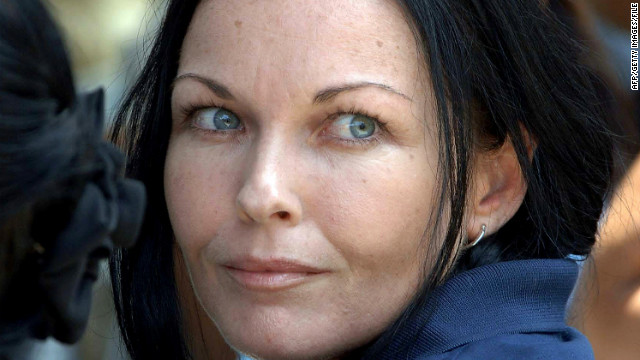
Australian woman Schapelle Corby has walked out of a prison in Bali,
Indonesia, after being convicted almost nine years ago of drug
smuggling.
The 36-year-old was
surrounded by a swarm of cameras and Australian network reporters to see
her released on bail in a case that supporters say was a setup.
Covered in a hat and rushed into a waiting bus by security forces, she will be taken to a parole office for further processing.
Indonesian Justice
Minister Amir Syamsuddin said Friday that Corby had been granted parole.
He said Corby's parole review was one of more than 1,000 that had been
completed.
She has always maintained
her innocence. Her lawyers argued the drugs were planted, possibly by
airport employees involved in trafficking.
But the court found her guilty and sentenced her to 20 years in prison.
The punishment fueled anger in Australia, where many people said they felt Corby had been set up.
After exhausting the
appeals process, Corby applied for clemency. A medical exam diagnosed
her as suffering from acute depression with psychotic symptoms.
In 2012, Indonesia reduced her sentence by five years, laying the foundation for her parole application.
Corby appears unlikely
to return to Australia anytime soon, though. Australian media have
reported that she will have to remain in Bali on parole until 2017.
Some Indonesians have
accused the authorities of giving Corby's case special attention. But
the justice ministry says she's being treated the same way as other
convicts in Indonesia.
“The power of an incumbent Nigerian
President is enormous. He has access to “carrots and sticks” second to
none. These include control of the security services and access to
almost unlimited amounts of money from oil”
–John Campbell, former US Ambassador to Nigeria.
Two recent interventions on the subject
of President Goodluck Jonathan and the 2015 elections, the first by Dr.
John Campbell, the United States former ambassador to Nigeria and the
second by Prof. Alade Fawole, a columnist of the Nigerian Tribune,
typify national and international concerns about Jonathan’s not fully
declared second term presidential ambition as well as his chances of
winning.
Campbell, author of the incisive, though
controversial, book, “Dancing on the Brink”, in his capacities as
Director of the Office of the Historian within the State Department as
well as public intellectual, writes frequently on Nigeria. Let me
briefly digress to ask the question: How many Nigerian experts in
International Relations including our former ambassadors are
commissioned to maintain an intellectual watch on other countries? I
have several academic colleagues who are experts on various aspects of
foreign policy and international relations but who have never been
invited by the Nigerian government to counsel on policymaking. Even the
Nigerian Institute of International Affairs like other research
institutes is pitifully underfunded, and remains so despite several
rounds of strikes by government-created research outfits around the
country. But that is a matter for another day.
Back to Campbell on Jonathan and 2015.
Although his article entitled, “Hard
for Nigeria’s President Goodluck Jonathan not to run in 2015 – But Can
He win?”, introduces necessary qualifiers, the ambassador’s view is that
Jonathan, if the elections hold, stands an admittedly narrow chance of
defeating the emergent and increasingly ascendant opposition namely: The
All Progressives Congress. Campbell derives his conclusion from certain
factors, the first of which is captured in the opening quote , the
awesome power of the Nigerian Presidency that is. Upon reading this
portion of Campbell’s essay, the first thing that came to my mind is the
abortive third term project of Nigeria’s former president, Olusegun
Obasanjo, which collapsed despite the full deployment of the economic
and security capacities of the president’s office. In other words,
while incumbency and the tendency of our Presidents to skew the playing
field in their favour confer advantages, it certainly is not as
formidable as Campbell postulates.
Controversial too is Campbell’s second
supporting argument that the Niger Delta warlords “are closely
associated with Jonathan” and therefore can exercise an implied veto
through terror by “setting the Delta on fire”. Although this is a
possibility that can thrust itself into the power equation, it is not
clear whether Nigerian voters will be influenced by it more so as the
power to upset the apple cart is not a monopoly of those in the Niger
Delta region alone. Indeed, whipping up such factors may alienate
voters who may otherwise have sympathised with Jonathan if for no other
reason than that it subverts voter sovereignty. Furthermore, there is a
limit to which the political elite can count on terror tactics as
bargaining instruments without risking generalised anarchy, provoking
counter terror or inviting democratic breakdown and authoritarian
solutions.
Amazon has released 100 Books to Read in a Lifetime, a curated list of essential books you must read before you die.
The list was carefully compiled by the Amazon Books editorial team and
has a wide variety of fiction and non-fiction. The list spans decades.
The oldest book on the list is Pride and Prejudice by Jane Austen (1813)
and the most recently published book on the list is Life After Life by
Kate Atkinson (2013).
The Amazon Books editorial team plan to audit the list regularly in order to ensure it always stays culturally relevant.
"We listed the books alphabetically by title," said Sara Nelson, Editorial Director of Print and Kindle Books at Amazon.com, " because our assumption is that no book is more important than another."
A suspected fake legal practitioner, Daniel Ikhidenor Ikhuoria, 30, a
native of Ekpoma in Edo State, southsouth Nigeria, has been arrested at
Lagos High Court, Igbosere, Lagos Island, western Nigeria, where he had
gone to attend court proceedings.
The suspect was nabbed by a police orderly attached to the Appeal Court, DCR Office, Lagos who suspected him.
Following his arrest, the state branch chairman of Nigerian Bar
Association, NBA, Mr. Alex Morka, was contacted about the development
and he instructed the police orderly to take the suspect to the nearest
police station.
The suspect was handed over to the police at Lion Building for interrogation.
During interrogation, according to the police, the suspect, a resident
of 34, Nathaniel Osagie Avenue, Ikorodu Road, Owode Onirin, Lagos,
allegedly confessed that he was a fake lawyer.
In a few weeks, Nigerians across ethnic and regional divides will be
gathering at a roundtable to discuss critical national issues. The
imperative for this National Conference as a necessary discussion over
Nigeria’s future was underscored by the President, Goodluck Jonathan, in
his Independence Day commemoration address
in October 2013. No doubt, there is need for consensus among the
country’s distinct ethnic and religious groups on critical governance
issues such as the structure of government, federalism, revenue
distribution, political representation and power sharing. Whether the
National Conference taking place this year is capable of addressing
Nigeria’s perennial existential problems is another question.
The clamour for a national dialogue among Nigeria’s over 350
ethno-linguistic groups has been as old as the country itself, since the
aftermath of the first military coup in 1966. Frequently called a
‘Sovereign National Conference’ (SNC), this roundtable discussion is
regarded as the elixir to pervasive corruption, ethnic chauvinism,
conflict and perversion of the rule of law all, of which have stifled
economic development, social harmony and the forging of a collective
Nigerian identity. The inflamed emotions in the debate for and against
an SNC in the Nigerian public sphere inhibit a dispassionate
interrogation of its practicality or necessity.
For proponents, a national dialogue is a bottom-up democratic
opportunity for many Nigerians to participate in nation-building in an
otherwise exclusionary political system dominated by a handful of
elites. These include the military and key players in the coups of 1966
who are the major power brokers today, their associates, powerful state
governors, an increasingly powerful business class and media moguls.
Gani Fawehinmi, a vociferous SNC advocate once lamented that
Nigerians “never had the opportunity to make inputs into, accept or
reject any constitutional framework through a referendum”. The national
conversation is thus a catalytic opportunity for Nigerians to “negotiate
the terms” of living together, within a contraption of British
colonialism. In this pro-SNC camp are ethnic associations, marginalised
politicians, activists, youth associations and other groups excluded
from the power circle.
Those opposing the National Conference argue that it is incapable of
addressing Nigeria’s problems which are outcomes of governance,
leadership and rule of law failures. Spending N7 billion ($42 million) towards yet another summit by a country with the highest number of out-of-school children in the world is regarded as “wasteful” by the Labour Union president and “diversionary”,
by the main opposition party, the APC. Others regard it as an
instrument for attaining a nefarious agenda by the specific government
in power. This “agenda” covers a wide gamut of allegations from tenure
elongation and covert constitutional amendment to regional domination
and secession.
Unsurprisingly, the expectations of what a National Conference can or
cannot achieve range from the pragmatic to the utopian. It is not
uncommon to hear the “we must talk” refrain in the wake of a Boko Haram attack,
a kidnapping incident or a grand corruption scandal. As usual, the
debates are laced with the poisonous sectional prejudices which normally
characterise the country’s public discourse. What is paradoxical
however, is the very elitist nature of the discourse over a summit aimed
at inclusive nation-building. A recent opinion poll revealed that nearly 9 in 10 (88%) Nigerians are not aware of the call to constitute a sovereign national conference.
Who is the authentic leader of the
Yoruba? Who among the present crop of politicians in the South-West
geopolitical zone qualifies to be called a leader in the mould of
Obafemi Awolowo, the revered leader who made the region a development
model in the First Republic? Are the so-called “progressives” in the
region true followers of his ideology or just pretenders who have
benefitted from his name to gain following and political mileage?
Given his exploits at both regional and
recently at national level, can the former governor of Lagos State and
national leader of the All Progressives Congress, Bola Tinubu, fit in
the shoes? The question of the quintessential leader like Awolowo is one
debate that has raged for years since the passing on of a man described
by the late Ikemba Nnewi, Chief Chukwuemeka Odumegwu-Ojukwu, as the
“best president Nigeria never had”. The idea of “the leader’’ in a
country where politics is dominated by ethnic loyalty and hero
worshipping has defined Nigeria political following since independence.
Even in the Fourth Republic where
political power at the centre can only be achieved by a political party
with national spread, the ethnic groups have often looked up to that
individual with enough political pedigree to champion their cause. In a
federal structure that has concentrated political and economic powers
at the centre, ethnicity and regional politics still dominate political
discourse. It has also determined how government patronage is dispensed.
More so, in the political dynamics at play in the country, the idea of
the “leader” is an important index of political following. Over the
years, power struggle among the ethnic groups has been characterised by
who among the political elite is positioned to lead the ethnic groups or
speak on their behalf. Just as these groups have championed their group
interests in the larger Nigeria, also have individuals with political
influence and pedigree emerged as leaders.
Virginia’s
ban on same-sex marriage was challenged in federal court on Tuesday in
the first serious legal test of the restrictive marriage amendments that
blanket the South.
The
challenge to Virginia’s ban, which was adopted by referendum in 2006,
was argued by the same bipartisan team of legal stars, Theodore B. Olson
and David Boies, that successfully contested California’s ban in 2010.
In
a rare scene, they were joined in the courtroom in Norfolk, Va., by the
new Democratic attorney general of Virginia, Mark Herring, who
announced two weeks ago that his office considered the marriage ban
unconstitutional and would assist the challenge.
“I’m
proud to say today the Commonwealth of Virginia stood on the right side
of the law and the right side of history,” Mr. Herring said in a
teleconference after Tuesday’s hearing.
Remaining in court as defendants were two court clerks, one of them represented by Alliance Defending Freedom, a coalition of conservative Christian lawyers.
There was confusion at Baptist High
School, Iwo, Osun State on Tuesday as some pupils shunned their uniforms
and wore choir gowns, white garments, Islamic apparel and other
unconventional dresses to the school.
Although no group or individual could be
identified as the mastermind of the bizarre dress code by the pupils,
there were, however, conflicting reasons for the behaviour.
While some people said the
unconventional dresses were a way of registering dislike for the same
uniform introduced by the government for all schools in the state,
others said some Christians who were opposed to wearing of hijab in
schools founded by Christian missionaries orchestrated the drama.
The suit instituted on the issue of hijab wearing to school is still pending before an Osun State High Court.
But Tuesday confusion reportedly became
more pronounced at the assembly ground as the pupils could not listen to
their teachers because they were busy lining up themselves along
religious lines.
A female pupil, who was dressed in a
purple gown usually worn by the choir in the Baptist church, was said to
have led Christian students in gospel praises, while her Muslim
counterpart dressed in hijab was seen hollering “Allau Akbar” and singing praises to Allah from the same platform simultaneously.
It was learnt that although many other
pupils appeared in the government-approved uniform, a few ones who are
neither Christians nor Muslims wore clothes with the insignia of their
religious beliefs, making the atmosphere in the school chaotic.
This generation of young African women is the most ambitious yet.
They are eager to build industries, reform societies, save lives,
rewrite history, and transform the continent.
Our annual “20 Young Power African Women” list illuminates the
brightest stars and Africa’s most outstanding female game changers. We
enlisted a group of young, professional African women to help identify
the most innovative, courageous, daring and successful young women aged
45 and under. It is a subjective list, no doubt, but it’s the closest
you will get to a definitive list.
Meet the 2013 class of 20 Young Power Women in Africa: the
continent’s emerging power brokers, the Amazons to watch, and the
custodians of tomorrow. Isabel Dos Santos, Angolan. Investor.
The daughter of Angola’s President, Jose Eduardo Dos Santos is
Africa’s richest woman. She is also one of the continent’s most powerful
businesswomen. Through her various holding companies, she controls a
25% stake in Angolan mobile telecom operator Unitel, a 25% stake in
Angola’s Banco BIC, 25% of ZON Optimus, a listed Portuguese cable TV
company, and just under 20% of Banco BPI, one of Portugal’s largest
publicly traded banks. She is also partnering with Sonae, Portugal’s
largest retailer, to launch 5 new food hypermarkets in Angola in 2014. Mimi Alemayehou, Ethiopian. Executive Vice President of the Overseas Private Investment Corporation (OPIC) Vera Songwe, Cameroonian. Country Director, World Bank, Senegal
Vera Songwe, a Cameroonian national, serves as the World Bank’s
Country Director for Senegal, Cape Verde, Gambia, Mauritania and
Guinea-Bissau. She is also a non-resident senior fellow at the Brookings
Institute with the Global Economy and Development and Africa Growth
Initiative. Tara Fela-DurotoyeNigerian. Founder, House Of Tara
The Nigerian-born entrepreneur and lawyer is the founder of House Of
Tara, Nigeria’s leading beauty and cosmetics company. House of Tara
develops a wide range of African-themed beauty products and perfumes and
also operates Nigeria’s foremost beauty academy. In 2013, Fela-Durotoye
was nominated as a Young Global Leader by the World Economic Forum. Rapelang Rabana, South African. Entrepreneur
One of Africa’s most recognizable young entrepreneurs. Rabana, 29, is
the CEO and founder of Cape Town-based Yeigo Communications, which
develops software for telecoms-related services including Voice over IP,
Instant messaging, SMS messaging and push email services. In 2008, Telfree, a Swiss mobile telecommunications firm, acquired a 51% stake in Yeigo. In December 2012 she founded Rekindle Learning, a company that provides adaptive mobile learning solutions.
Claire Akamanzi, Rwandan. Chief Operating Officer, Rwanda Development Board
Akamanzi, 34, is the Chief Operating Officer of the Rwandan Development Board (RDB),
a government institution tasked with accelerating economic growth and
development in Rwanda by enabling private sector growth. Akamanzi has
had a successful career in public service, serving as Rwanda’s
commercial diplomat in London and as a trade negotiator in Geneva for
the Rwandan government at the World Trade Organization. She was also
previously the Deputy Director-General of the Rwanda Investment and
Export Promotion Agency (RIEPA). Valentina da Luz Guebuza, Mozambiquan. Investor
The 33 year-old daughter of Mozambique’s President Armando Guebuza
heads Focus 21 Management & Development, a large family-owned
investment holding company with interests in banking,
telecommunications, fisheries, transport, mining and property. Focus 21
owns significant stakes in Beira Grain Terminal and Chinese Pay TV
Company StarTimes’ operations in Mozambique. Hadeel Ibrahim,Sudanese.Mo Ibrahim Foundation
Hadeel Ibrahim is the daughter of Sudanese-born British mobile telecoms billionaire Mo Ibrahim.
She is the founding Executive Director of the Mo Ibrahim Foundation,
which was established in 2006 to support leadership and good governance
in Africa. She also serves on the Boards of the Mary Robinson Foundation
for Climate Justice and the African Governance Institute (AGI). Alengot Oromait, Ugandan. Member Of Parliament
Proscovia Oromait, 20, is the youngest parliamentarian in Africa. In
2012 she was elected Member of Parliament for Usuk County, Katakwi
District in Uganda. Her father, Michael Oromait, served as the MP for
the same Parliamentary seat before his death in July 2012. She is a
member of Uganda’s ruling National Resistance Movement party. Monica Musonda,Zambian. Chief Executive Officer and Founder of Java Foods
Musonda is the founder of Java Foods, a Zambia-based food processing company that manufactures the eeZee brand of Instant Noodles. Musonda
previously worked with Africa’s richest man, Aliko Dangote, as the
director of legal and corporate affairs at Dangote Group, where she led a
project to build a cement plant in Zambia. She currently serves on the
Boards of Dangote Industries Zambia Limited and the Central Bank of
Zambia. Musonda is also the Chairperson of Kwacha Pension Trust Fund,
Zambia’s largest single employer pension fund. She is an Archbishop
Desmond Tutu Leadership Fellow and was named a 2013 Young Global Leader
by the World Economic Forum. Lindiwe Mazibuko,South African. Politician & Parliamentary Leader for Democratic Alliance (DA)
Mazibuko, age 33, is a Parliamentary Leader for the Democratic
Alliance (MP for North Durban) and Leader of the Opposition in the
National Assembly in South Africa. As the country’s fourth youngest
parliamentarian, Mazibuko is already being touted as a future leader of
the Democratic Alliance. Mazibuko was named South Africa’s Most
Influential Woman in 2012 and a Young Global Leader by the World
Economic Forum in 2013. Minoush Abdel-Meguid,Egyptian. Private Equity Investor, Entrepreneur, Investment Banker
The Egyptian-born investment banker is the co-founder of Union Capital, an
Egyptian investment firm primarily focused on small and medium-sized
enterprises. Abdel-Meguid is also founding president of the Egyptian
Young Bankers Association, an organization that mentors young banking
professionals. Ola Orekunrin,Nigerian. Medical Doctor & Founder, The Flying Doctors
Orekunrin, 25,is founder and Managing Director
of Flying Doctors Nigeria Ltd., an air ambulance service based in Lagos,
Nigeria. Orekunrin’s company is the first air ambulance service in West
Africa to provide urgent helicopter, airplane ambulance and evacuation
services for critically injured people. She is a 2013 New Voices Fellow
at the Aspen Institute and was named a Young Global Leader in 2013 by
the World Economic Forum.




 Ethiopian. Executive Vice President of the Overseas Private Investment Corporation (OPIC)
 Cameroonian. Country Director, World Bank, Senegal
 Nigerian. Founder, House Of Tara
 South African. Entrepreneur
 Rwandan. Chief Operating Officer, Rwanda Development Board
 Mozambiquan. Investor
 Sudanese. Mo Ibrahim Foundation
 Ugandan. Member Of Parliament
 Zambian. Chief Executive Officer and Founder of
  South African. Politician & Parliamentary Leader for Democratic Alliance (DA)
 Egyptian. Private Equity Investor, Entrepreneur, Investment Banker
 Nigerian. Medical Doctor & Founder, The Flying Doctors